
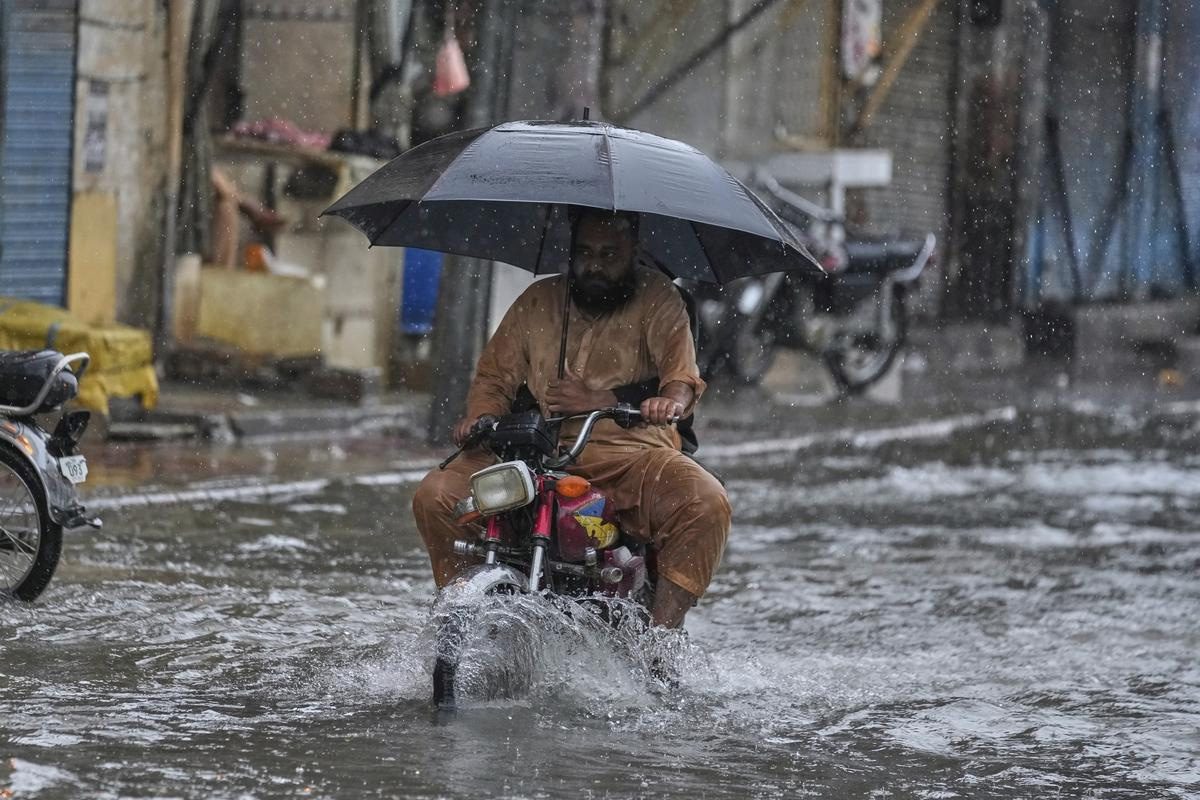
Punjab Climate Change Triggers Record Rainfall across the province, signaling a climate emergency that can no longer be ignored.
This year, Punjab has been drenched like never before. What began as early monsoon showers quickly escalated into relentless downpours, flooding streets, breaking decades-old records, and overwhelming local authorities. Experts agree—Punjab Climate Change Triggers Record Rainfall, and it’s a warning shot of what’s to come.
In cities like Lahore, and especially Chakwal—where 423mm of rain fell in just 24 hours between July 16th and 17th—the skies seem determined to rewrite the region’s weather history. During the first half of July 2025, Punjab saw a 73% increase in rainfall compared to typical averages. That’s not just unusual. It’s unprecedented.
This year’s monsoon didn’t just arrive early—it arrived with force. PDMA spokesperson Chaudhry Mazhar confirmed the season kicked off on June 25th, nearly three weeks ahead of schedule. Traditionally, monsoons in Pakistan begin mid-July, but Punjab Climate Change Triggers Record Rainfall, so far out of sync with past weather patterns that meteorologists are calling it a climate red flag.
“This year’s early rains weren’t just early — they were extremely intense,” Mazhar said. “And the heavy downpours are likely to continue through mid-September.”
The numbers tell a story. Historically, Punjab receives 800–900mm of monsoon rain. This year, it has already crossed the 1,000mm mark and may reach 1,200mm by the season’s end. The Punjab Climate Change Triggers Record Rainfall pattern isn’t just about volume — it’s about how unprepared we are for it.
Despite early warnings from the Meteorological Department and the PDMA, many local administrations were caught off guard. Streets turned to rivers. Drains overflowed. Urban centers like Lahore and Rawalpindi, lacking the natural water absorption of a greener past, faced widespread flooding.
What’s causing this chaos? Rising sea temperatures in the Arabian Sea and Indian Ocean are pumping more moisture into monsoon winds, according to climate expert Dr. Saadia Khalid. These winds, now heavier and more erratic, are dumping rain in regions that rarely saw storms of this scale.
“Urbanization, deforestation, and poor land use have stripped cities of their ability to cope,” Khalid warned. “Without trees, green belts, and wetlands, we’ve lost the natural buffers that used to protect us from flooding.”
If the trend continues—and experts believe it will—Punjab Climate Change Triggers Record Rainfall may become an annual headline. But it doesn’t have to.
Environmentalists are urging immediate climate action:
- Reduce carbon emissions
- Implement sustainable land policies
- Restore green spaces
- Strengthen urban drainage systems
Because without systemic change, these record-breaking rains will only bring record-breaking damage.
As Punjab soaks under grey skies, the message is clear: climate change isn’t coming — it’s already here. And unless we act fast, nature will keep reminding us, storm after storm.
Read the latest news and updates on supernews.pk