
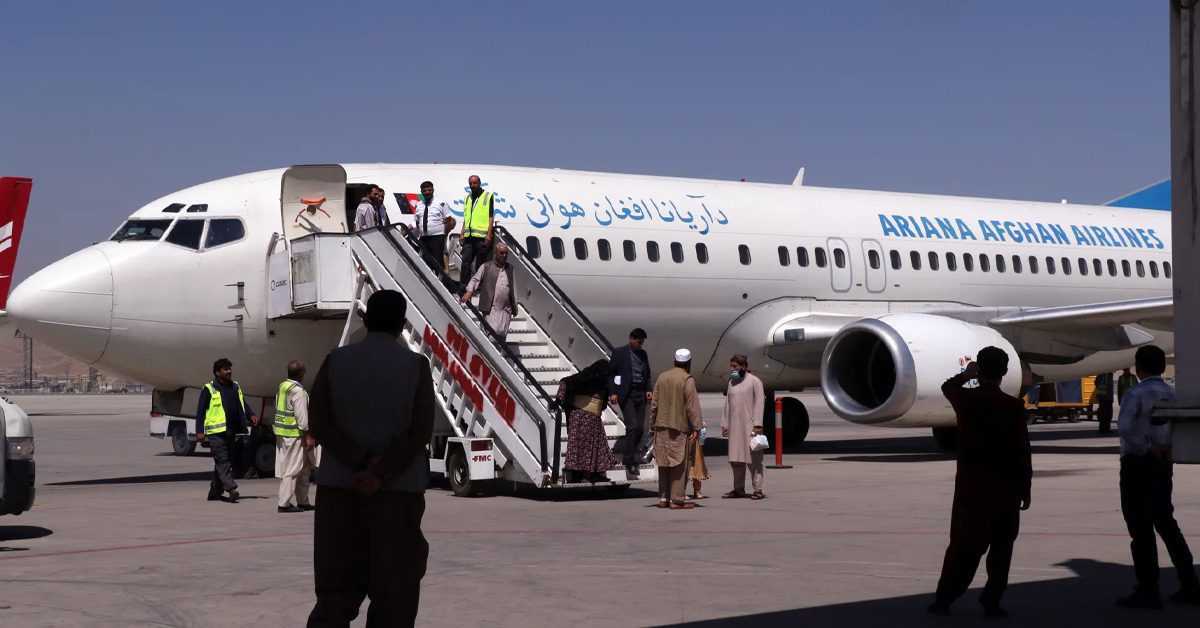
Afghanistan Kabul airport has come to a standstill after the Taliban government imposed a nationwide internet shutdown, disrupting flights and daily life across the country. The sudden blackout, which began on Monday, has left Afghanistan Kabul and other provinces cut off from the outside world, severely affecting essential services including banking, communications, and online education.
The Taliban has not provided an official reason for the shutdown, only stating that it will last until further notice. The United Nations has warned that the decision could cause significant harm, leaving Afghanistan Kabul residents struggling without internet and telephone connectivity.
Reports from locals describe Kabul airport as “nearly deserted,” with no visible arrivals or departures. Flight-tracking service Flightradar24 confirmed that several incoming and outgoing flights were cancelled, while many others were marked “unknown.” Passengers scheduled to arrive in Afghanistan Kabul this week were told flights may not resume until Thursday at the earliest.
The impact of the internet shutdown on Afghanistan Kabul has been widespread. Banking operations were paralyzed, online education disrupted, and communication across the country collapsed. Najibullah, a Kabul shopkeeper, said residents felt “blind without phones and internet,” adding that businesses and markets were frozen. While some banks remained open, customers faced long queues and minimal cash withdrawals.
International agencies reported losing contact with their Kabul offices. Journalists in Afghanistan Kabul said they were unable to conduct phone interviews, forcing camera crews to visit interviewees in person. News channels like Tolo News warned of broadcast disruptions, urging citizens to rely on social media for updates.
The UN mission in Afghanistan called for the Taliban to immediately restore internet access, stressing that the blackout has left Afghanistan Kabul and the rest of the country isolated, threatening economic stability and worsening the ongoing humanitarian crisis.
Netblocks described the situation as a “total internet blackout,” saying multiple networks had been disconnected step by step, also affecting telephone services. Taliban officials previously claimed restrictions on fibre-optic internet were intended to curb “evils,” though no official explanation has been given for the latest shutdown.
Women and girls in Afghanistan Kabul are among the hardest hit, as online education was one of their last opportunities after the Taliban banned midwifery courses and removed women-authored books from universities. A university student said, “When I heard that the internet had been cut, the world felt dark to me.”
Since retaking Afghanistan in 2021, the Taliban has steadily imposed restrictions on freedoms, with the internet blackout in Afghanistan Kabul marking one of the most severe measures yet.
Read latest news and updates at supernews.pk