
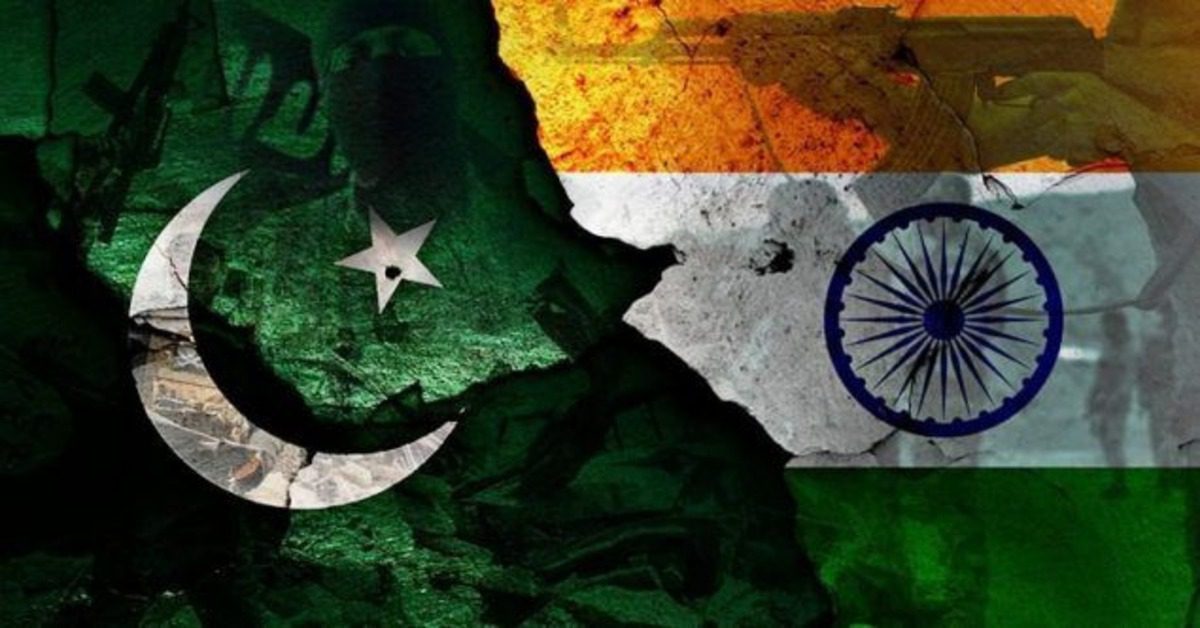
Pakistan, India Agree on Phased De-escalation Amid Ceasefire Talks
ISLAMABAD:
In a significant diplomatic development, Pakistan and India have agreed to implement a structured and stage-wise de-escalation mechanism, according to an official statement released by Pakistan’s Foreign Office on Friday.
Speaking at the weekly press briefing, Foreign Office spokesperson Shafqat Ali Khan described the recent Pakistan-India ceasefire agreement as a step in the right direction. “We encourage India to sincerely follow through on its commitments,” Khan stated.
Khan expressed gratitude to international partners who played a constructive role in facilitating dialogue between Pakistan and India. He also acknowledged past remarks by former U.S. President Donald Trump regarding U.S. engagement in promoting peace in the region, especially around the Jammu and Kashmir dispute.
“The ceasefire was made possible through the cooperation of friendly nations. Contrary to India’s misleading narrative painting Pakistan as desperate or frustrated, the facts clearly reflect a cooperative and responsible approach,” the spokesperson emphasized.
He highlighted that the Directors General of Military Operations from Pakistan and India have remained in contact since May 10, maintaining dialogue that culminated in a formal plan for phased de-escalation.
In a recent goodwill gesture, Pakistan returned an Indian Border Security Force (BSF) officer on May 14, 2025. India reciprocated by releasing a sepoy from the Pakistan Rangers.
Despite this progress, Khan criticized India’s attempts to twist facts, especially regarding Pakistan’s nuclear capabilities. “While the world is promoting peace and regional stability, India’s inflammatory rhetoric undermines these efforts and paints a distorted picture of the situation,” he noted.
Pakistan and India stand at a critical crossroads, Khan said, with Pakistan continuing to demonstrate commitment to the ceasefire and de-escalation for the sake of regional peace. “Our resolve should never be mistaken for weakness. Pakistan will respond with full determination if provoked again,” he warned.
Reaffirming Pakistan’s stance, he stressed, “We believe in peaceful coexistence and prefer diplomacy over hostility. A meaningful, result-driven dialogue is essential to resolve all outstanding issues, particularly the Jammu and Kashmir conflict, which is central to lasting peace in South Asia.”
Support for China on Zangnan
On another front, Pakistan reiterated its support for China’s sovereignty and territorial claims, especially concerning Zangnan (also known as Arunachal Pradesh), amidst renewed tensions between India and China.
Khan stated that Pakistan stands firmly with China’s territorial integrity and emphasized that India’s aggressive posturing is jeopardizing regional security.
He also dismissed Indian media reports alleging nuclear radiation near border zones as “completely baseless.” Khan clarified that recent military operations under Operation Bunyanum Marsoos were conducted solely in self-defence, in line with international law.
“Pakistan’s actions were consistent with Article 51 of the UN Charter, aimed solely at safeguarding national sovereignty,” he added. In Punjab, the operation was also commemorated with tributes honoring those who served.
In conclusion, Pakistan and India must now build on the ceasefire agreement with sincerity and mutual respect. Khan urged India to demonstrate its commitment not just in words but through verifiable actions. “This ceasefire presents an opportunity for both nations to move toward lasting peace,” he concluded.
Read latest news on supernews.pk