
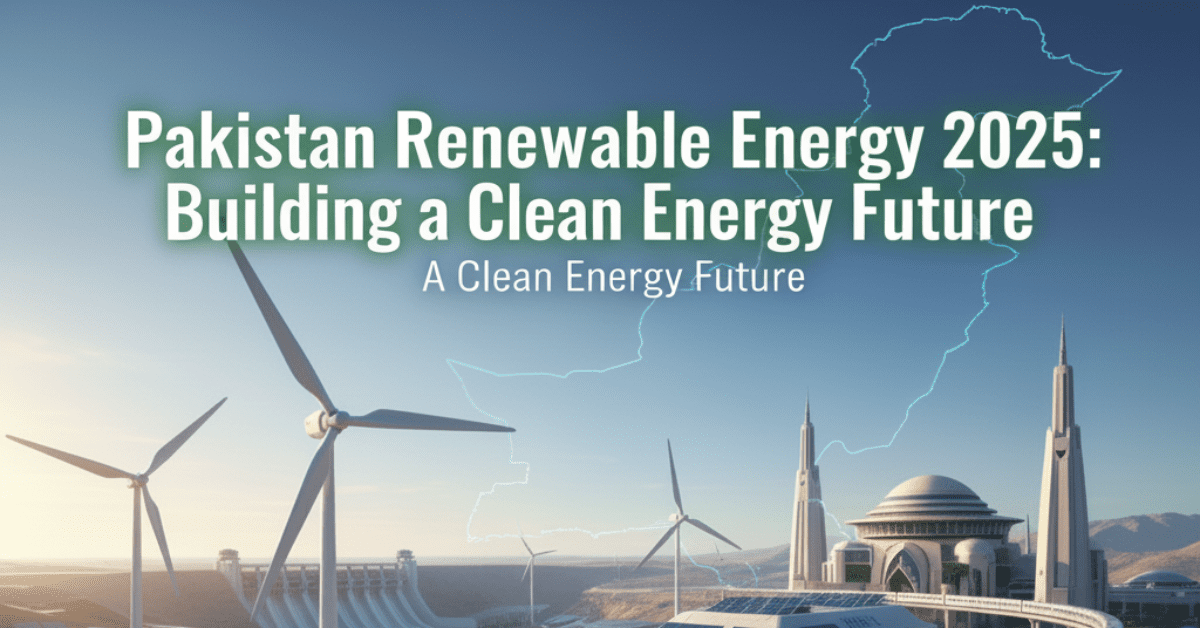
As Pakistan steps into 2025, the country finds itself at a crucial crossroads in its energy journey. With surging population demands, climate challenges, and rising fuel import costs, the focus has shifted toward sustainable alternatives. The momentum around Pakistan renewable energy 2025 has never been stronger — marking a defining transition from fossil fuel dependency to a clean energy future in Pakistan.
Over the past decade, Pakistan’s renewable energy sector has gained impressive traction, primarily through solar energy projects and wind power installations. The government’s strategic initiatives, global partnerships, and private sector investments are all shaping a greener, more resilient energy landscape.
In this comprehensive guide, we’ll explore how Pakistan is evolving its renewable energy ecosystem, what milestones have been achieved so far, and what lies ahead in 2025 and beyond.
-
The Growing Importance of Renewable Energy in Pakistan
For years, Pakistan’s energy mix has relied heavily on oil, gas, and imported fuels. This dependence has made the country vulnerable to global price fluctuations, trade deficits, and environmental pollution. However, as global trends pivot toward sustainability, Pakistan is also rethinking its approach.
According to the Alternative Energy Development Board (AEDB), renewable energy is expected to supply at least 30% of Pakistan’s total electricity generation by 2030. This vision aligns with international commitments such as the Paris Agreement and the United Nations Sustainable Development Goals (SDGs).
In 2025, Pakistan renewable energy isn’t just an environmental necessity — it’s an economic strategy to ensure energy security, job creation, and technological growth.
-
Pakistan’s Renewable Energy Targets for 2025
The National Renewable Energy Policy sets ambitious goals for scaling up green power. The target for Pakistan renewable energy 2025 is to generate around 20% of total electricity from renewable sources (excluding hydropower).
Key Objectives Include:
- Expanding solar and wind generation capacity across key regions.
- Encouraging private sector participation through incentives and tax relief.
- Reducing dependency on imported fossil fuels.
- Promoting local manufacturing of renewable energy equipment.
- Building technical expertise and green jobs for the youth.
With these goals, Pakistan aims not just to fill the energy gap but to transform the sector into a sustainable and self-reliant system.
-
Solar Energy in Pakistan: Powering the Nation from the Sun
Among all renewable sources, solar energy in Pakistan stands out as the most rapidly expanding. Blessed with high solar irradiance — averaging 5.3 kWh/m²/day — Pakistan has tremendous potential for photovoltaic (PV) generation.
Major Solar Projects in 2025
- Quaid-e-Azam Solar Park (Bahawalpur):
One of Asia’s largest solar farms, this project currently generates 400 MW of power, with plans to expand to 1,000 MW by 2026. - Sindh and Balochistan Initiatives:
New solar parks are under development in Jhimpir, Sukkur, and Lasbela, aimed at providing clean electricity to rural areas. - Distributed Solar Systems:
Urban rooftops and agricultural tube wells are increasingly adopting small-scale solar installations. The Net Metering Policy by NEPRA allows consumers to sell excess power back to the grid — making solar a profitable investment.
Government Incentives
- Duty-free import of solar panels and inverters.
- Subsidized financing for domestic and commercial setups.
- Awareness programs promoting solar adoption in remote areas.
The adoption curve for solar energy in Pakistan has been exponential since 2020. By 2025, the country’s installed solar capacity is expected to surpass 5 GW, marking a major milestone in the renewable transition.
-
Wind Power in Pakistan: Harnessing the Natural Breeze
If solar represents Pakistan’s daytime strength, wind power defines its nocturnal energy potential. The coastal regions of Sindh and Balochistan provide consistent wind speeds averaging 7–8 m/s, ideal for electricity generation.
Top Wind Corridors in Pakistan
- Jhimpir Corridor (Sindh):
The epicenter of wind power in Pakistan, hosting more than 30 operational wind farms generating over 1,800 MW. - Gharo-Keti Bandar Region:
Identified as another high-potential zone, currently undergoing large-scale expansion under public-private partnerships. - Balochistan Coastal Belt:
Early-stage feasibility studies indicate vast potential for both onshore and offshore wind projects.
Recent Wind Energy Developments
In 2025, the government’s Wind Power Expansion Program aims to increase national capacity from 2,000 MW to 3,500 MW through new projects financed by international organizations such as the World Bank and Asian Development Bank.
Wind power’s reliability, low operational cost, and scalability make it a core pillar of Pakistan renewable energy 2025.
-
Hydropower and Biomass: Supporting Renewable Diversity
While solar and wind dominate headlines, other renewable sources are quietly playing a supporting role in Pakistan’s energy mix.
Hydropower
Hydropower remains the backbone of Pakistan’s clean energy sector, contributing over 25% of total electricity. However, due to seasonal variability and environmental impact, its expansion is more cautious. Small- and medium-scale run-of-river projects are now prioritized for sustainable growth.
Biomass and Biogas
Pakistan’s vast agricultural base generates massive biomass waste annually. Converting this into energy not only reduces waste but also provides a stable energy source.
By 2025, biomass-based projects are expected to contribute around 1,000 MW to the national grid — especially in Punjab and Sindh’s rural belts.
Together, these resources form a complementary network that strengthens Pakistan’s clean energy future.
-
Technological Innovations Driving Renewable Growth
The Pakistan renewable energy 2025 landscape is also defined by innovation. With increasing R&D investments, both government and private players are adopting advanced technologies.
Key Advancements:
- Smart Grids and AI-based Forecasting:
Integration of smart meters and AI helps predict solar and wind generation, balancing supply and demand more effectively. - Energy Storage Solutions:
Lithium-ion battery storage systems are being deployed to manage peak load and ensure grid stability. - Hybrid Systems:
Combining solar and wind installations with backup storage for 24/7 renewable energy supply. - Green Hydrogen Projects:
Early pilot projects in Sindh aim to explore hydrogen production from renewable sources — an emerging frontier in Pakistan’s energy innovation.
These technologies not only increase efficiency but also reduce the cost per kilowatt-hour, making clean energy more accessible.
-
Policy and Regulatory Framework
A robust regulatory framework has been essential to the progress of Pakistan renewable energy. Key policies include:
- Alternative and Renewable Energy (ARE) Policy 2019:
Lays out a roadmap for achieving 30% renewable share by 2030. - Net Metering Regulations:
Empower residential and commercial users to contribute to the grid. - Renewable Energy Investment Framework (REIF):
Offers tax incentives, land leasing facilities, and simplified approval processes. - Private Power Infrastructure Board (PPIB):
Facilitates foreign direct investment and ensures transparent project execution.
Regulatory reforms are being streamlined further in 2025, with a focus on eliminating bureaucratic delays and ensuring grid integration of renewables.
-
Challenges Facing Renewable Energy Development
Despite rapid progress, the journey of Pakistan renewable energy 2025 is not without obstacles.
Key Challenges Include:
- Grid Instability: Integrating intermittent solar and wind power requires advanced transmission systems.
- Financing Barriers: High upfront costs deter small investors.
- Policy Gaps: Delays in approvals and inconsistent tariff structures can slow project rollout.
- Local Manufacturing Deficit: Heavy reliance on imported solar panels and turbines impacts cost competitiveness.
- Awareness and Training: Limited technical expertise in rural areas hinders adoption.
Addressing these issues requires coordinated efforts between government bodies, private investors, and international partners.
-
The Role of International Cooperation
Pakistan’s renewable transformation is significantly supported by global partnerships. Multilateral organizations and foreign investors have injected funds, technology, and expertise to accelerate growth.
Major Partnerships:
- World Bank’s Sindh Solar Energy Project: $100+ million financing to expand solar infrastructure.
- China-Pakistan Economic Corridor (CPEC): Collaboration on multiple wind and solar farms under the Green CPEC initiative.
- USAID and GIZ Programs: Capacity building, regulatory reform, and training programs for energy professionals.
- Private Sector Ventures: Companies from China, UAE, and Denmark are investing in wind and solar projects in Sindh and Punjab.
Such collaborations are crucial to achieving the clean energy future Pakistan envisions for 2025 and beyond.
-
Economic and Environmental Impact
Transitioning to renewables has a dual benefit — economic growth and environmental sustainability.
Economic Benefits
- Creation of over 100,000 new jobs in installation, maintenance, and manufacturing.
- Reduction of import bills by $2–3 billion annually through local energy generation.
- Attraction of foreign direct investment (FDI) into green infrastructure.
Environmental Impact
- Reduction in carbon emissions by nearly 15 million tons annually by 2025.
- Improved air quality and reduced dependency on thermal power.
- Conservation of natural resources and support for global climate goals.
These benefits underscore how renewable energy isn’t just an alternative — it’s an opportunity for holistic national development.
-
The Road Ahead: Vision Beyond 2025
While 2025 marks a significant milestone, Pakistan’s renewable energy transformation is an ongoing journey. The next phase focuses on energy storage, electric mobility, and green hydrogen to build resilience and self-sufficiency.
Future Priorities:
- Develop local manufacturing capabilities for solar panels and wind turbines.
- Encourage microgrids for remote communities.
- Expand electric vehicle (EV) infrastructure using renewable power.
- Enhance R&D to localize technology and reduce costs.
- Foster academic collaboration to train skilled energy professionals.
By staying committed to innovation and policy support, Pakistan is poised to emerge as a regional leader in renewable energy.
Conclusion
The year 2025 symbolizes a turning point in Pakistan’s renewable energy revolution. From large-scale solar parks in Bahawalpur to the wind corridors of Jhimpir, every project brings the nation closer to a sustainable and prosperous future.
Through bold policies, international cooperation, and technological advancement, Pakistan renewable energy 2025 is reshaping the nation’s economic and environmental landscape. While challenges remain, the collective vision for a clean energy future Pakistan continues to gain momentum — paving the way for generations to come to live in a greener, more energy-secure country.
Read Latest news and updates at supernews.pk