
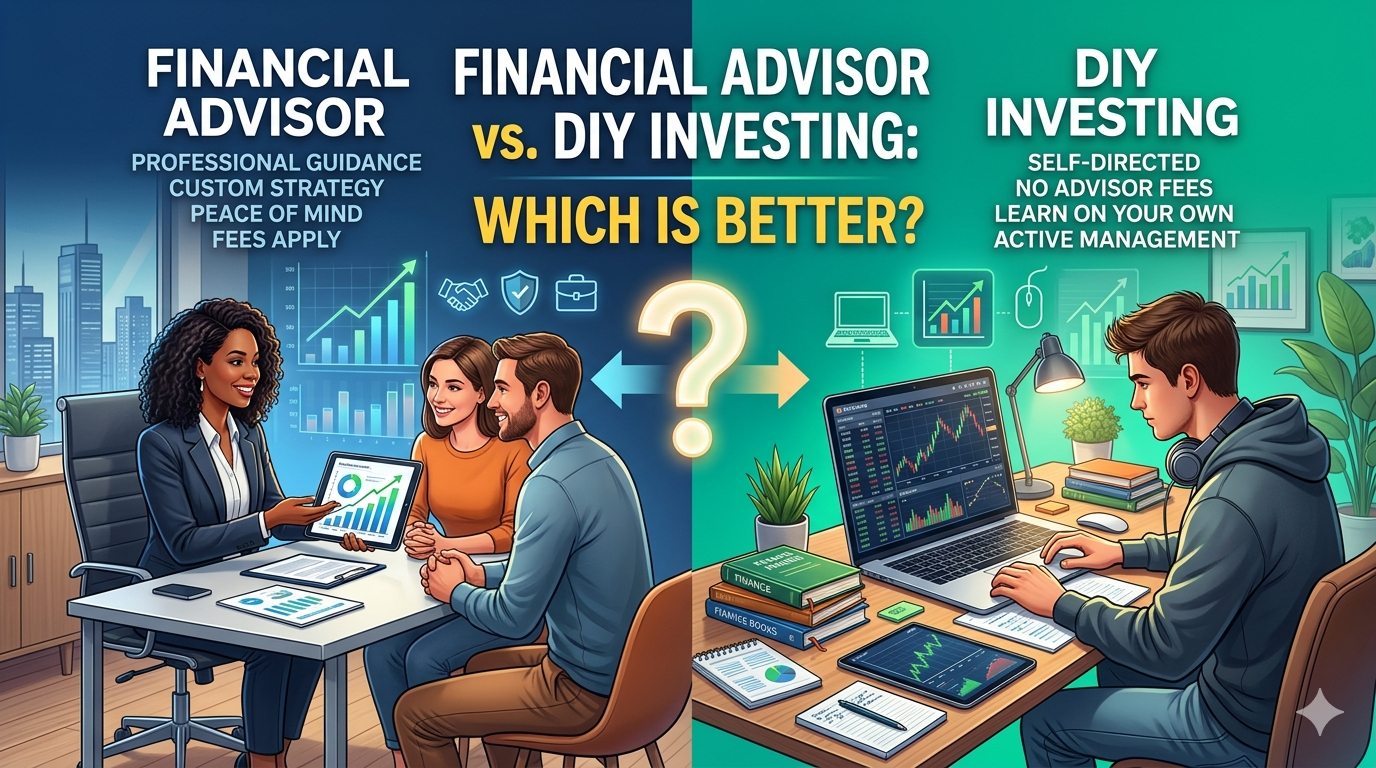
When it comes to building wealth and securing your financial future, one of the biggest decisions you’ll face is whether to hire a financial advisor or manage your investments on your own. Both approaches have their advantages and disadvantages, and the right choice depends on your financial knowledge, goals, risk tolerance, and available time.
In today’s digital world, investing has become more accessible than ever. Online brokerages, investment apps, and educational resources allow individuals to take control of their finances without professional assistance. At the same time, financial advisors continue to provide valuable expertise, personalized guidance, and strategic planning that many investors find beneficial.
This article explores the key differences between working with a financial advisor and pursuing DIY investing, helping you determine which approach is best suited for your financial journey.
What Is a Financial Advisor?
A financial advisor is a professional who helps individuals manage their finances, investments, retirement planning, tax strategies, estate planning, and other financial matters. Their goal is to help clients achieve their financial objectives while minimizing risks and maximizing opportunities.
Financial advisors may offer services such as:
- Investment management
- Retirement planning
- Tax planning
- Estate planning
- Risk management
- Budgeting assistance
- Wealth preservation strategies
Some advisors charge a percentage of assets under management, while others work on a flat fee or hourly basis.
What Is DIY Investing?
DIY (Do-It-Yourself) investing involves managing your own investment portfolio without relying on a professional advisor. Investors research financial markets, select investments, monitor performance, and make buying or selling decisions independently.
Thanks to technology, DIY investing has become increasingly popular. Investors can access:
- Online brokerage accounts
- Stock market analysis tools
- Educational websites
- Investment apps
- Financial news platforms
- Portfolio tracking software
DIY investors have complete control over their investment decisions and strategies.
Advantages of Hiring a Financial Advisor
1. Professional Expertise
Financial advisors possess specialized knowledge and experience in investment management. They understand market trends, economic conditions, tax regulations, and financial planning strategies that can benefit clients.
For investors who lack confidence or expertise, professional guidance can provide peace of mind.
2. Personalized Financial Planning
Every investor has unique goals and circumstances. A financial advisor develops customized strategies tailored to your income, expenses, risk tolerance, and long-term objectives.
Whether you’re saving for retirement, buying a home, or planning for your children’s education, personalized advice can help you stay on track.
3. Emotional Discipline
One of the biggest challenges in investing is controlling emotions. Fear and greed often lead investors to make poor decisions, such as panic-selling during market downturns or chasing hot investment trends.
A financial advisor acts as a rational guide, helping clients maintain discipline during periods of market volatility.
4. Time Savings
Managing investments requires research, monitoring, and ongoing adjustments. Hiring a financial advisor allows you to focus on your career, family, and personal interests while a professional handles your financial strategy.
5. Comprehensive Financial Management
Financial advisors often provide services beyond investing, including:
- Retirement planning
- Tax optimization
- Insurance reviews
- Estate planning
- Debt management
This holistic approach can improve overall financial health.
Disadvantages of Hiring a Financial Advisor
1. Advisory Fees
One of the primary drawbacks is cost. Financial advisors typically charge fees that may reduce overall investment returns over time.
Common fee structures include:
- Percentage of assets managed
- Hourly rates
- Flat annual fees
- Commission-based compensation
Even small fees can significantly impact long-term portfolio growth.
2. Potential Conflicts of Interest
Not all advisors are fiduciaries. Some may recommend products that generate higher commissions rather than those that best serve the client.
Investors should carefully evaluate an advisor’s credentials and compensation structure.
3. Reduced Control
Working with a financial advisor means delegating some decision-making authority. Investors who prefer complete control over their finances may find this uncomfortable.
Advantages of DIY Investing
1. Lower Costs
One of the most attractive aspects of DIY investing is cost savings. Without advisory fees, investors keep more of their returns.
Many online brokerages now offer:
- Commission-free trading
- Low-cost index funds
- Minimal account fees
These savings can compound significantly over the long term.
2. Full Control Over Investments
DIY investors have complete authority over:
- Asset allocation
- Investment selection
- Trading decisions
- Portfolio adjustments
This level of control appeals to individuals who enjoy managing their finances.
3. Educational Growth
Managing your own investments encourages continuous learning. Investors develop valuable knowledge about:
- Financial markets
- Economic indicators
- Investment strategies
- Risk management
These skills can provide lifelong benefits.
4. Flexibility
DIY investors can make decisions instantly without consulting an advisor. This flexibility allows for rapid responses to changing market conditions or personal financial circumstances.
5. Transparency
Since you’re making all investment decisions yourself, there’s complete transparency regarding where your money is invested and why.
Disadvantages of DIY Investing
1. Steep Learning Curve
Successful investing requires understanding:
- Asset allocation
- Diversification
- Risk management
- Market psychology
- Tax implications
New investors may find the learning process overwhelming.
2. Emotional Decision-Making
Without professional guidance, investors are more susceptible to emotional mistakes such as:
- Panic selling
- Overtrading
- Chasing market trends
- Ignoring long-term strategies
These behaviors can negatively impact returns.
3. Time Commitment
DIY investing demands significant time for:
- Research
- Portfolio monitoring
- Market analysis
- Strategy adjustments
Busy professionals may struggle to dedicate sufficient attention to their investments.
4. Risk of Costly Mistakes
Inexperienced investors may make errors such as:
- Poor diversification
- Excessive risk-taking
- Tax inefficiencies
- Inadequate retirement planning
Mistakes can lead to substantial financial losses.
Who Should Choose a Financial Advisor?
Hiring a financial advisor may be ideal if you:
- Have a high income or substantial assets
- Own a business
- Need complex tax planning
- Are approaching retirement
- Lack investing knowledge
- Prefer professional guidance
- Want comprehensive financial planning
Individuals with complicated financial situations often benefit most from expert advice.
Who Should Choose DIY Investing?
DIY investing may be suitable if you:
- Enjoy learning about finance
- Have a simple financial situation
- Want to minimize fees
- Are comfortable researching investments
- Have sufficient time to manage your portfolio
- Prefer full control over decisions
Many younger investors start with DIY investing while building financial knowledge and confidence.
Can You Combine Both Approaches?
Absolutely.
Many successful investors use a hybrid strategy that combines the strengths of both methods.
For example:
- Manage basic investments independently.
- Consult a financial advisor for retirement planning.
- Seek professional tax advice when needed.
- Use low-cost index funds while receiving occasional guidance.
This approach can reduce costs while still benefiting from expert insights.
Key Questions to Ask Yourself
Before deciding between a financial advisor and DIY investing, consider the following questions:
- How comfortable am I with financial concepts?
- Do I have time to manage investments regularly?
- Can I remain disciplined during market downturns?
- Is my financial situation simple or complex?
- How important is minimizing investment costs?
- Do I prefer professional guidance or complete control?
Your answers can help identify the most suitable path.
Final Verdict: Which Is Better?
There is no one-size-fits-all answer to the financial advisor versus DIY investing debate.
A financial advisor offers expertise, personalized planning, emotional support, and comprehensive financial management. However, these benefits come with fees and reduced control.
DIY investing provides lower costs, flexibility, and complete control but requires time, discipline, and a willingness to learn.
For beginners, individuals with complex finances, or those approaching retirement, a financial advisor may provide significant value. For knowledgeable investors who enjoy managing their portfolios and want to maximize cost efficiency, DIY investing can be an excellent option.
Ultimately, the best choice depends on your financial goals, experience level, and personal preferences. Whether you choose professional guidance, self-directed investing, or a combination of both, the most important step is to start investing consistently and stay committed to your long-term financial success.