
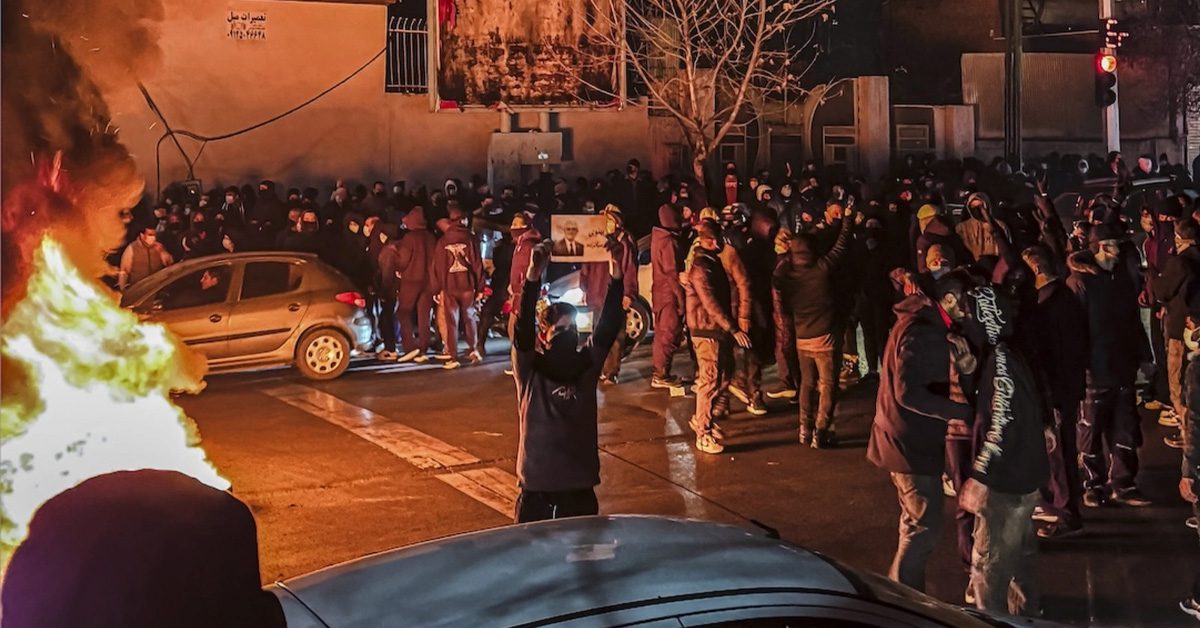
Anti-government protests that began in Iran in late December 2025 over deteriorating economic conditions have ballooned into one of the country’s largest waves of unrest since the 1979 Islamic Revolution, with widespread demonstrations and a harsh government crackdown. The initial protests, triggered by soaring inflation, rising food prices and the sharp depreciation of the Iranian rial, started in Tehran’s Grand Bazaar and quickly spread to major cities and provinces nationwide, encompassing demands that go beyond economic issues to include opposition to the clerical leadership.
Protesters have taken to the streets in Tehran, Isfahan, Mashhad, Shiraz and other regions, with millions joining demonstrations in all 31 provinces despite a near-total internet blackout imposed by authorities aimed at limiting communication and coverage of events. Security forces have used live ammunition, tear gas and mass arrests to quell the unrest, leading to tens of thousands of detentions and thousands of deaths; estimates of casualties vary widely, with independent rights groups reporting at least 2,000–2,500 deaths, while some activist networks and media outlets suggest figures could be significantly higher.
The government has accused foreign powers of fuelling unrest, while Iranian leaders have framed some demonstrations as violent “riots” and warned of severe repercussions for participants. In response to the unrest, United States President Donald Trump has voiced support for the protesters and signalled possible diplomatic or military pressure in support of their calls, a stance that has drawn both international backing from some Western governments and criticism from others wary of escalation.
The crisis has drawn global attention due to the scale of the protests, the intensity of the state response and the broader implications for Iran’s internal stability and regional geopolitics, with ongoing uncertainty about how the situation will evolve as demonstrators continue to defy security forces despite severe repression.