


The Pakistan batting crisis deepened during the second Test against England at Lord’s after the visitors were bowled out for just 110 in their first innings.
England had earlier made 290, giving Pakistan a 180-run deficit. By the end of the second day, England had reached 81-3 in their second innings, taking their overall lead to 261 runs.
The collapse has increased pressure on Pakistan’s batting lineup, which also struggled during the first Test at Headingley.
Sarfaraz explains Pakistan’s batting crisis
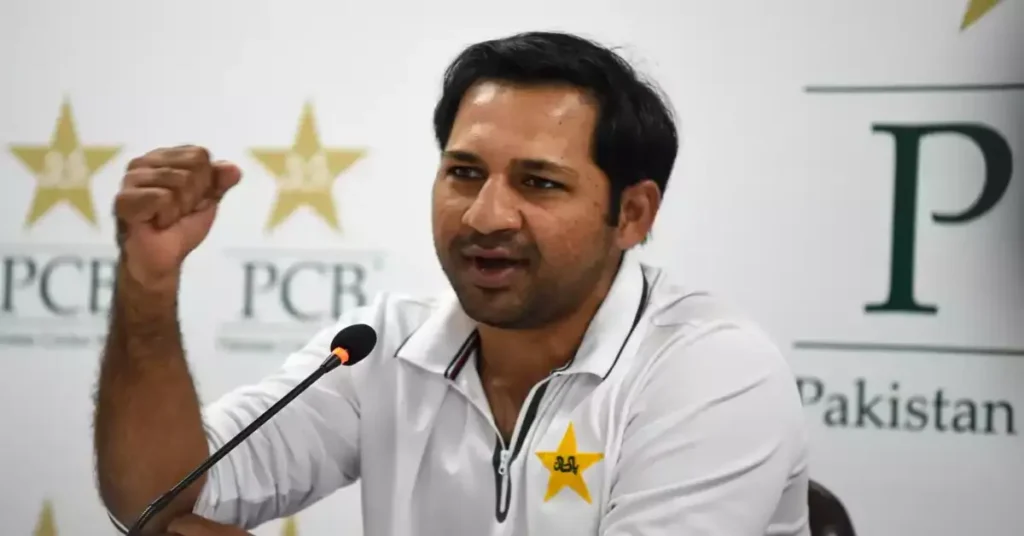
Head coach Sarfaraz Ahmed believes Pakistan’s batsmen need to spend more time at the crease, particularly during the difficult opening phase against England’s fast bowlers.
Sarfaraz highlighted the first 40 to 50 deliveries as a crucial period, stressing the importance of surviving the initial pressure before attempting to score more freely.
Azan Awais provided an example of that approach at Lord’s.
Awais faced 102 balls for his 46 and was Pakistan’s highest scorer. He initially focused on surviving England’s attack before finding opportunities to score.
Sarfaraz praised the young opener for getting through Jofra Archer’s early spell and then becoming more positive at the crease.
However, Awais received little support. Pakistan lost five wickets for 37 runs late in the innings, while only Saud Shakeel, with 16, managed to reach double figures alongside him.
The innings highlighted Pakistan’s difficulty in turning individual contributions into substantial partnerships.
England’s pace attack keeps Pakistan under pressure
England’s seamers were highly effective with the new ball.
Ollie Robinson took 4-11 from 13 overs, while Archer claimed 3-26 and Josh Tongue took two wickets. Their disciplined bowling repeatedly put Pakistan’s batsmen under pressure.
Pakistan’s numbers across the series underline the problem. They made 171 and 135 in the first Test before being dismissed for 110 at Lord’s.
The batting lineup therefore needs more than individual starts. Pakistan need partnerships that can absorb pressure and build competitive totals.
Sarfaraz points to fielding and pace depth
Sarfaraz said missed catching opportunities had helped England build a bigger first-innings total and suggested Pakistan could have restricted them to around 200 if those chances had been taken.
England eventually reached 290, with Jamie Smith scoring 61 and Jordan Cox making 55.
Sarfaraz also raised concerns about Pakistan’s supply of genuine fast bowlers. He said the National Cricket Academy needs to help identify and develop more pace options, while highlighting Mohammad Ali and Khurram Shahzad.
Those are longer-term concerns, but Pakistan’s immediate challenge remains their batting.
Can Pakistan still recover?
England’s 261-run advantage leaves Pakistan facing a difficult task.
Sarfaraz believes the match can still change quickly if Pakistan’s bowlers take early wickets and restrict England’s second innings.
But Pakistan will eventually need to bat again, making their ability to survive England’s attack crucial.
The message from Sarfaraz is straightforward: Pakistan’s batsmen need to show greater patience, protect their wickets early and build partnerships.
Awais has shown that approach can work. Pakistan now need more of their batting lineup to follow it.