


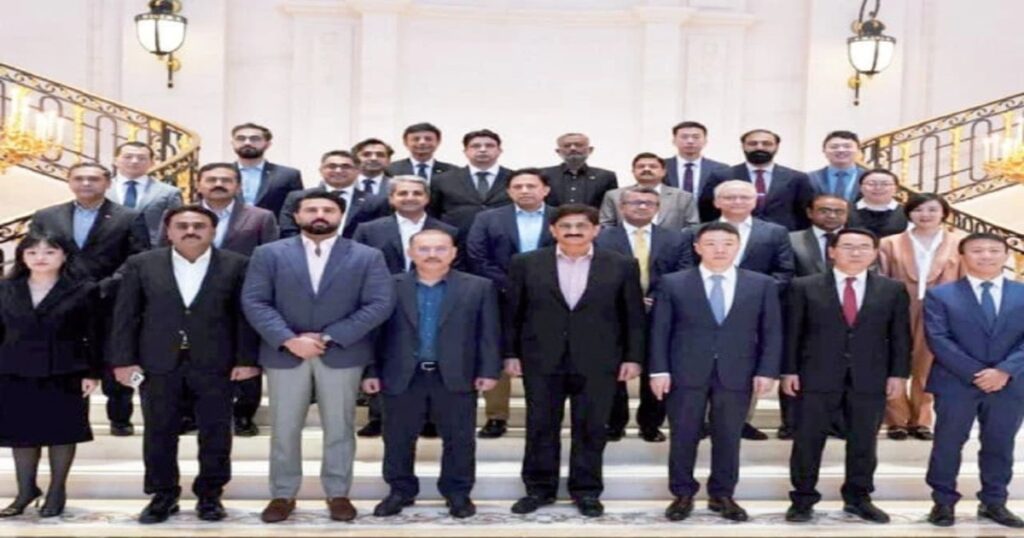
The Sindh government has signed a memorandum of understanding (MoU) with Chinese technology company Huawei to develop Pakistan’s first AI-powered digital province, aiming to improve public services, urban management and emergency response through advanced technology.
The agreement was finalised during Sindh Chief Minister Syed Murad Ali Shah’s visit to Huawei’s Lianqiu Lake Research and Development Centre in Shanghai on Friday. The partnership will focus on artificial intelligence (AI), cloud computing, digital governance, smart-city solutions and technology training for young people in Sindh.
Karachi Flood Warning System Among Key Priorities
One of the proposed projects is a pilot city-operations and flood early-warning platform for Karachi. The system aims to help authorities identify emerging urban problems, monitor potential flooding and improve emergency responses.
Karachi, with a population exceeding 20 million, faces challenges involving urban flooding, traffic congestion, waste management and public infrastructure. The provincial government hopes that digital monitoring and data-driven decision-making will help officials respond to these issues more efficiently.
Murad Ali Shah also referred to Wuhan’s smart-city model as a potential example for improving urban management in Karachi.
Sindh Plans Government Cloud and Data Centre
The proposed partnership also includes developing a roadmap for a provincial government cloud and data centre.
The planned digital infrastructure could incorporate:
-
Cloud computing: Supporting digital government services and data management.
-
Cybersecurity: Strengthening the protection of government systems and information.
-
Disaster recovery: Helping restore essential digital services following disruptions.
-
AI computing: Providing infrastructure for artificial intelligence applications.
The government also intends to explore digital public services and the use of data to support administrative decisions.
These initiatives are intended to modernise government operations and improve the delivery of services to residents.
Technology Training Opportunities for Sindh’s Youth
Developing local skills is another major part of the agreement. The chief minister proposed establishing an innovation and training centre at Karachi Education City, alongside information and communication technology (ICT) training and certification programmes in collaboration with provincial universities.
The initiative aims to help students develop practical skills in emerging technologies and prepare for employment in the digital economy.
Murad Ali Shah also invited Huawei to establish research and development facilities or technology laboratories in Karachi. Collaboration with local universities and technology institutions could support research, pilot projects and technical education.
Huawei and Sindh to Develop Joint Projects
The MoU was signed by Special Assistant to the Chief Minister Syed Qasim Naveed Qamar in the presence of Murad Ali Shah and Huawei Pakistan’s chairman.
During the visit, Huawei representatives briefed the Sindh delegation on developments in semiconductor design, wireless communications, 5G and 6G networks, cloud computing, artificial intelligence and the Internet of Things.
The chief minister proposed forming a joint working group to coordinate implementation and prepare an agreed work plan for the first year.
The agreement establishes a framework for cooperation, while the proposed projects will require further planning and implementation.
Read more similar news in our local category.
What the Partnership Could Mean for Sindh
The collaboration could create opportunities to modernise public administration, improve disaster preparedness and expand technology education across the province.
However, the practical impact will depend on how quickly the proposed projects are implemented, how effectively government departments use the new systems, and whether the initiatives deliver measurable improvements for residents.
For Karachi in particular, an effective flood-warning platform and stronger digital urban-management systems could help authorities identify problems earlier and coordinate responses more efficiently.
If you want to read more news like this visit supernews.pk