


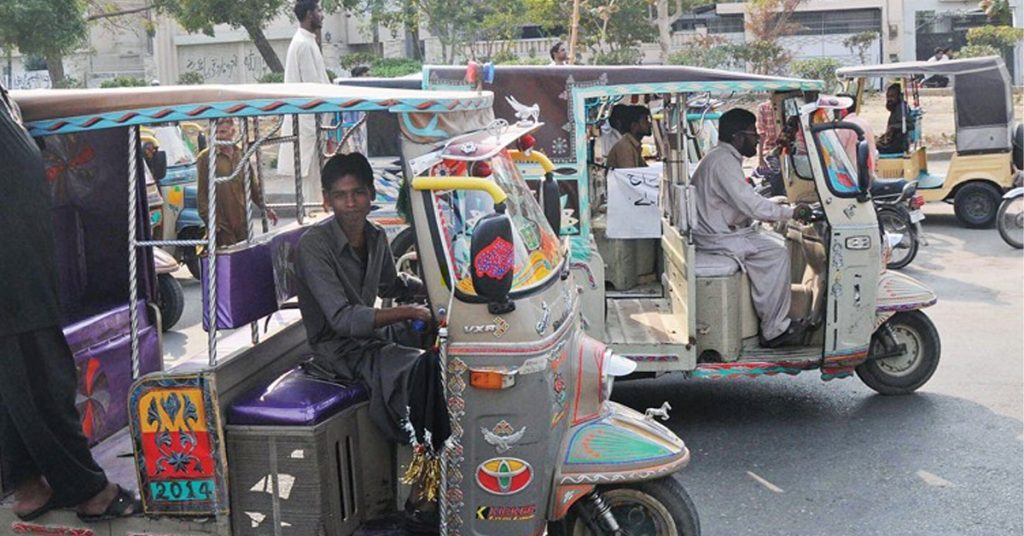
The Sindh High Court (SHC) is examining multiple petitions challenging the recently enforced ban on “chingchi” three-wheelers and motor-cab rickshaws across major roads in Karachi.
The restriction, issued via notification by the city’s commissioner, prohibits motor-cab rickshaws — including “One Plus Two” and “One Plus Four” models — from operating on 11 key thoroughfares such as Shahrah‑e‑Faisal, I. I. Chundrigar Road, Shahrah‑e‑Quaideen and others. The ban was later expanded to cover 20 roads and remains in effect until at least October 15.
In court, petitioner Imran Zaidi argued the decision threatens the livelihoods of thousands of informal-transport operators who were not consulted before the order was issued. He also noted that Karachi’s public-transport infrastructure is inadequate, forcing commuters to rely on overcrowded buses and rickshaws.
Representing the government, Additional Advocate General Sagheer Ahmed Abbasi defended the ban’s legality, citing the Sindh Motor Vehicle Act and invocation of Section 144 of the Criminal Procedure Code (CrPC), which permits temporary restrictions on movement or assembly in urgent circumstances. He added that violations could lead to prosecution under Section 188 of the Pakistan Penal Code (PPC).
Traffic officials emphasised that Karachi already possesses alternative transit options — including conventional buses, minibuses and the Bus Rapid Transit (BRT) system — to accommodate commuters affected by the rickshaw ban.
Another hearing, filed by the Chingchi Rickshaw Association, is scheduled for November 11, signalling that the debate on balancing urban traffic management and rural-transport livelihoods remains ongoing.
Read latest news and updates on supernews.pk