


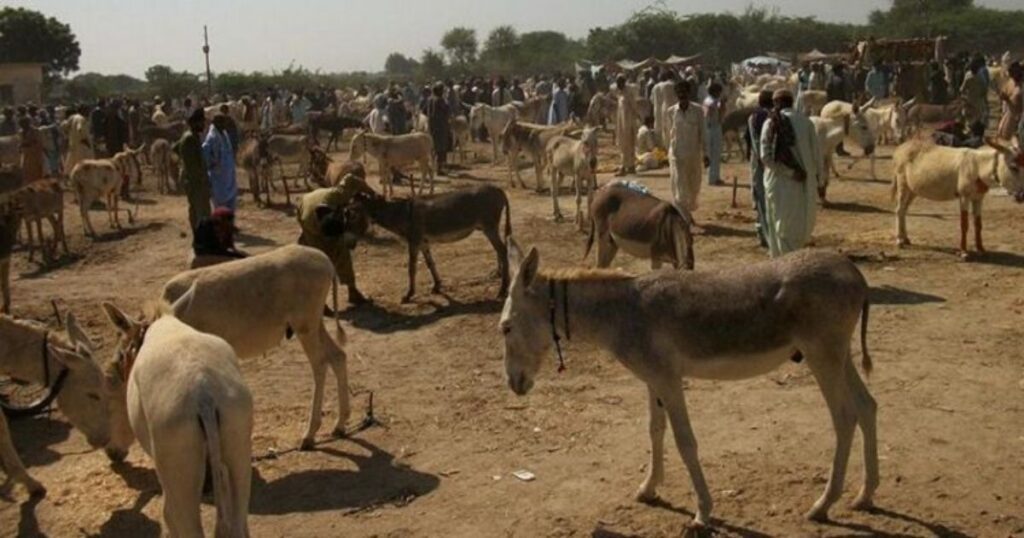
Pakistan has exported 81 tonnes of donkey meat, bones and hides to China through Gwadar, highlighting the growing trade between the two countries. The three consignments departed on October 5, 2026, from a Chinese-operated processing facility in Gwadar’s North Free Zone, according to The Daily CPEC.
Each consignment weighed 27 tonnes and was shipped after completing the required customs clearance and export procedures. The shipments also met the prescribed standards, according to reports.
Donkey Products Shipped From Gwadar
The consignments were dispatched by Hangeng, a Chinese company operating in Gwadar’s North Free Zone. A company official said the donkey meat was transported in frozen condition by sea.
The facility follows a controlled export policy under which products leave the free zone only by air or sea. The arrangement is intended to prevent donkey meat and related by-products from entering Pakistan’s domestic market.
$50 Million Slaughterhouse Supports Exports
Pakistan completed construction of a modern donkey slaughterhouse and processing facility in Gwadar last year. The China-led project involved an investment of approximately $50 million and was established to process donkey meat and hides for international markets.
The facility forms part of efforts to expand value-added livestock exports and increase commercial activity in the Gwadar Free Zone.
Why China Imports Donkey Meat and Hides
China has a market for donkey meat, while donkey hides are particularly valuable as a raw material for Ejiao, a traditional Chinese product made from donkey-hide gelatin.
Pakistan has one of the largest donkey populations, with about 5.8 million animals, according to figures cited in recent reports. Growing Chinese demand has created an export opportunity for Pakistan’s livestock and meat-processing sector.
Read more similar news in our local category.
Gwadar’s Role in Pakistan-China Trade
The latest shipment highlights Gwadar’s growing role in specialised exports under Pakistan-China economic cooperation. The processing facility is designed to serve overseas demand while using the port and free-zone infrastructure to move goods to international markets.
The development could support foreign-exchange earnings and employment opportunities, although the longer-term economic impact will depend on export volumes, operational capacity and market demand.
If you want to read more news like this visit supernews.pk