


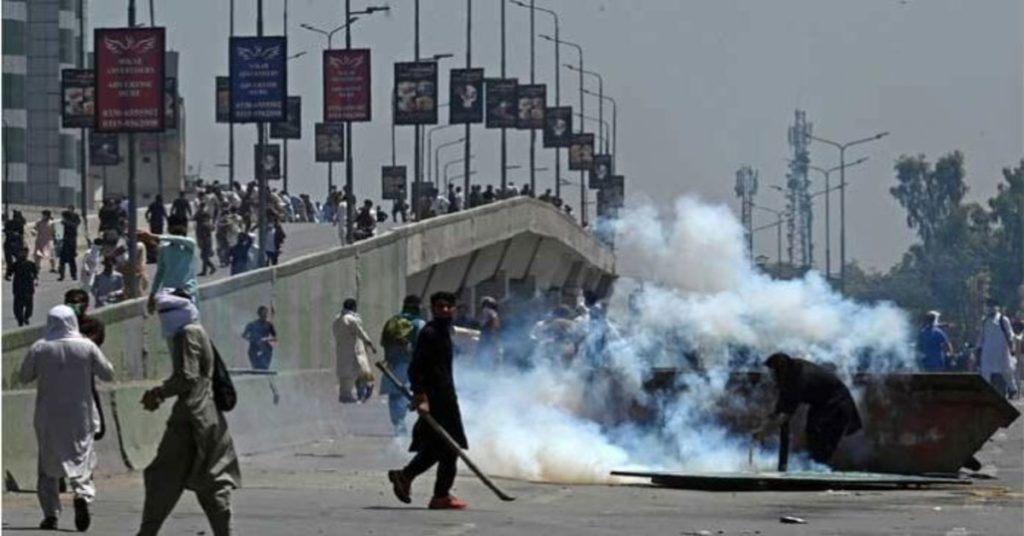
May 9 PTI cases have taken a dramatic turn as a special anti-terrorism court (ATC) in Faisalabad handed down a 10-year prison sentence to top Pakistan Tehreek-e-Insaf (PTI) leaders, sending shockwaves through the political landscape.
On Thursday, Judge Abul Hasnat Zulqarnain ruled against 108 PTI leaders implicated in the violent protests that erupted following the arrest of Imran Khan. Out of 185 accused, 77 were acquitted—but not without controversy. Among the convicted were some of the party’s most prominent names: Shibli Faraz, Omar Ayub, Zartaj Gul, and Sahibzada Hamid Raza. Each of them received a decade behind bars under the banner of the May 9 PTI cases.
While 60 leaders were slammed with 10-year sentences, others received shorter, three-year terms. The rulings come amid growing political tension, especially as opposition figures gear up for fresh protests. In a somewhat surprising twist, Fawad Chaudhry and Zain Qureshi, along with several others, were acquitted, further intensifying the divide over the legitimacy of the trials.
Adding more fuel to the fire, former MNA Sheikh Rashid Shafiq—nephew of Sheikh Rasheed Ahmed—did not appear in court and has reportedly gone into hiding to avoid arrest. His absence adds to the intrigue surrounding the May 9 PTI cases.
The day didn’t end with just the convictions. The court also issued arrest warrants for 50 additional PTI leaders, citing their roles in protests planned around August 5. These warrants come at a time when PTI is calling for what it labels a “historic movement” to restore national sovereignty.
PTI Secretary General Salman Akram Raja took to the media, rallying support for the upcoming demonstrations and denouncing what he called “unconstitutional suppression.” He called the crackdown part of a larger scheme to silence dissent, especially following the Punjab Assembly’s move to refer 26 PTI lawmakers to the Election Commission.
Among the new list of wanted individuals are former President Arif Alvi, Murad Saeed, Faisal Javed, Salman Akram Raja, Ali Amin Gandapur, and several other key political figures, further deepening the legal web spun by the May 9 PTI cases.
The Faizabad protest case, linked to Imran Khan’s disqualification, remains a high-profile part of the May 9 PTI cases narrative. CM Ali Amin Gandapur continues to be listed as a proclaimed offender. The ATC instructed Islamabad Police to act on existing warrants, with no exemptions, unless overridden by a Peshawar High Court order.
Other hearings, such as those connected to the March 18 protest and the November 26 demonstrations, have seen similar legal actions. For example, Ali Afzal Sahi, MNA from Faisalabad, also had his arrest warrants reissued due to repeated absences.
In Rawalpindi Division alone, 31 cases from the November 26 protest are under review. Government prosecutors revealed that non-bailable warrants have already been issued for 15 PTI leaders. Even more troubling for the party, bail cancellation requests for 68 accused have been filed, intensifying the judicial pressure linked to the May 9 PTI cases.
In an emotionally charged twist, another development linked to the May 9 PTI cases involves the alleged killing of a police officer in Taxila. Both Imran Khan and Bushra Bibi have been named among the accused. Non-bailable warrants were also issued in related cases from Wah Cantt and Naseerabad.
These events point to a relentless wave of legal actions against PTI’s leadership—actions that have not only rattled the party but also deepened political divides across the country.
With August 5 looming, PTI’s planned protest date, the country watches as the story of the May 9 PTI cases continues to unfold. Will public demonstrations gain momentum, or will the state’s legal apparatus continue to tighten its grip?
One thing is clear: this is more than just a legal matter—it’s a defining chapter in Pakistan’s ongoing political saga.
Read the latest news and updates on supernews.pk