


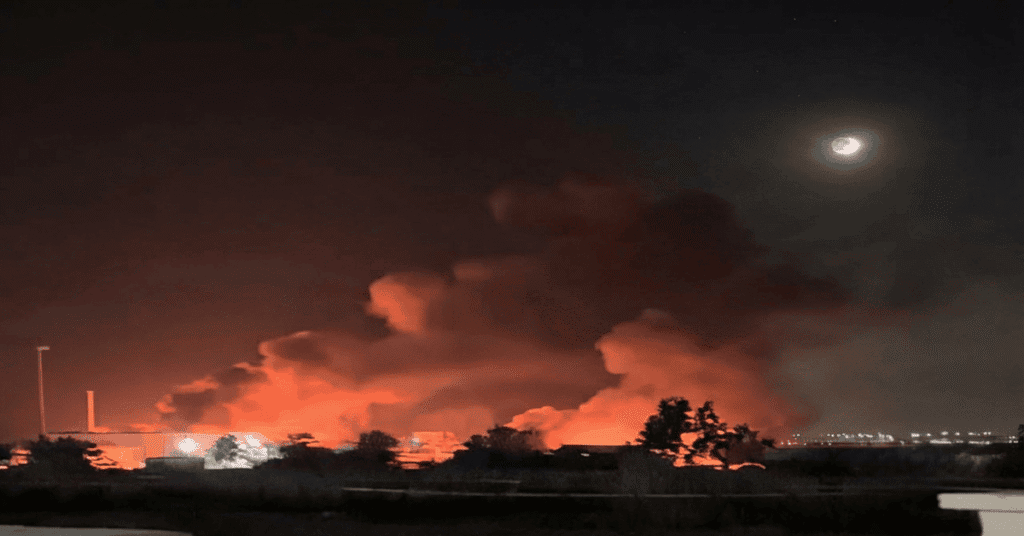
The latest US Iran Strikes have pushed the Middle East closer to another dangerous chapter after American forces launched a fresh wave of overnight attacks across southern Iran. As the fragile ceasefire between Washington and Tehran started to fray, explosions reverberated through a number of strategic cities, including Bushehr, Chabahar, Bandar Abbas, Jask, Sirik and Abu Musa Island, one of the biggest military operations since then.
Iranian authorities confirmed one person was killed in Iranshahr and several others were injured. Heavy bombardment also disrupted electricity supplies in Chabahar after critical infrastructure was damaged. Residents reported hearing repeated explosions as Iranian air defence systems attempted to intercept incoming attacks throughout the night.
Washington described the military action as retaliation for recent attacks on commercial ships travelling through the Strait of Hormuz.
US Central Command said the operation sought to weaken Iran’s ability to threaten international shipping routes. President Donald Trump also warned Iran against targeting civilian vessels, saying the United States would respond with even greater force if such attacks continued.
Military planners closely watched Bushehr because it houses Iran’s only operational nuclear power plant. Strikes on military installations nearby did not affect the nuclear complex itself, local authorities claimed. The revelation relieved worries of an impending nuclear-related catastrophe, but security experts cautioned that ongoing strikes near such sensitive installations might have dire implications for the area.
In Chabahar, one of Iran’s most important commercial ports, reports indicated that docks, maritime facilities and transport infrastructure suffered damage. Explosions rocked Bandar Abbas, another key port on the Strait of Hormuz. Iranian air defence units tried to intercept the incoming attacks. The port plays a vital role in Iran’s economy and supports military operations along one of the world’s busiest shipping routes.
Military analysts say the latest US Iran Strikes represent a clear escalation compared with previous attacks. Earlier strikes hit limited military targets. This time, US forces attacked several locations along Iran’s southern coast. The broader operation aimed to weaken Iran’s coastal defences and protect shipping in the Strait of Hormuz.
Iran condemned the strikes and filed official protests with the United Nations. Iranian Ambassador Amir Saeid Iravani accused the United States of violating the UN Charter and Iran’s sovereignty, arguing that the military action breached the memorandum of understanding signed in June to reduce hostilities. Tehran insisted it reserves the right to defend itself if further attacks continue.
The renewed fighting has also placed diplomacy under intense pressure. Only weeks ago, both countries appeared to be moving toward a limited de-escalation agreement. However, accusations over attacks on commercial vessels and disagreements surrounding the Strait of Hormuz have quickly erased much of that progress. Officials on both sides are trading serious threats, leaving little space for urgent discussions.
Beyond the military dimension, the conflict threatens the global economy. The Strait of Hormuz carries much of the world’s oil exports. Any disruption could push oil prices higher. It could also increase shipping costs and worsen inflation. Energy markets remain highly sensitive to developments in the Gulf.
The escalation comes amid funeral rites for Iran’s late Supreme Leader Ali Khamenei, adding another dimension of political and emotional importance within the nation. Large public gatherings and heightened national sentiment could make diplomatic compromise even more difficult in the coming days.
The new US Iran Strikes are more than another exchange of military assaults. They highlight how quickly a fragile ceasefire can collapse when trust disappears. Every new strike increases the possibility of miscalculation, drawing more countries into an already volatile region. Businesses, investors and governments worldwide are now watching closely because any instability around the Strait of Hormuz has the potential to affect global energy supplies and international trade.
Military retaliation may achieve short-term objectives, but history shows that lasting stability rarely comes through force alone. Unless Washington and Tehran reopen meaningful diplomatic channels, the cycle of retaliation could deepen the crisis, increase civilian suffering and create wider economic consequences far beyond the Middle East. The coming days will likely determine whether this remains a limited confrontation or develops into a much broader regional conflict.
Read more similar news at our international section