


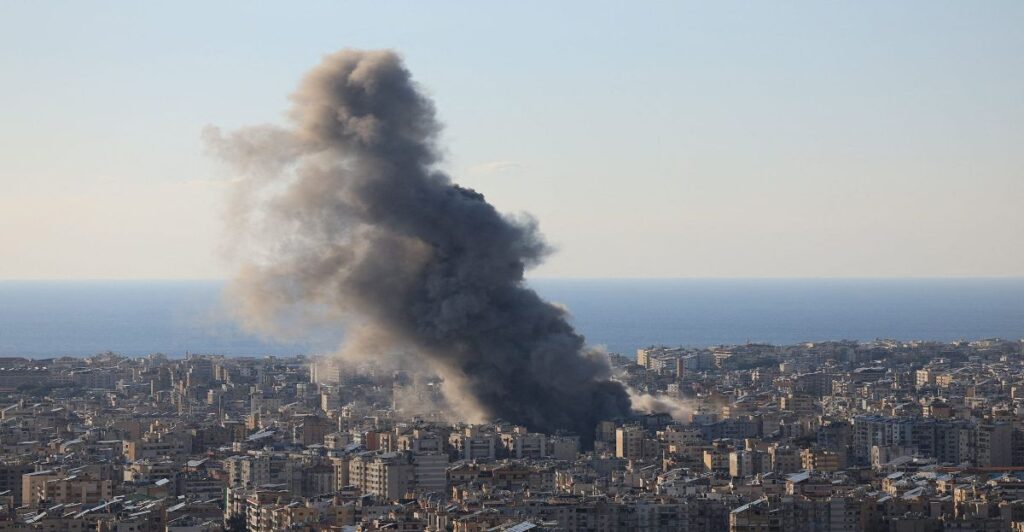
September 20, 2026 — Tensions across the Middle East are rising as Iran says it has received information suggesting that the United States could resume military strikes against the country.
The warning comes amid increasing regional instability, including recent Houthi attacks on Saudi Arabia and growing uncertainty over US policy toward Iran. The developments have prompted governments and US citizens across the region to prepare for a possible escalation.
Iran Warns of Retaliation
Iran’s Islamic Revolutionary Guard Corps warned that any renewed US attack would lead to retaliation against American bases and interests across the region.
Iranian officials have also warned that countries supporting potential US military action could face consequences. Tehran has maintained that it does not want a prolonged war but has continued to signal that it would respond to any new strikes.
Iranian officials have separately outlined conditions for renewed negotiations with Washington, including demands concerning sanctions, oil exports and access to Iranian ports.
Trump Says Major Decisions Are Ahead
US President Donald Trump has indicated that his administration is considering several options regarding Iran.
According to The Guardian, Trump told Fox News that “very big things” could happen in the near future and mentioned military action, economic pressure and a potential agreement as options under consideration.
Trump also cut short a weekend visit to Camp David, although no official reason was given for the change.
Meanwhile, the US State Department issued a security alert warning American citizens in the Middle East that the regional security environment remained complex and could experience unforeseen escalation.
Houthi Attacks Add to Regional Tensions
The latest tensions follow attacks by Yemen’s Houthi movement on Riyadh, including targets near Saudi oil infrastructure. Saudi authorities said their air defenses intercepted missiles, while photographs showed smoke rising from an area near an Aramco facility. The Red Sea port city of Yanbu was also targeted.
The United States considers the Houthis to be closely aligned with Iran, while Tehran denies that it controls the group’s actions.
The attacks have added another layer to an already complicated regional security situation involving Iran, Saudi Arabia, Yemen and the United States.
Gulf Region Faces Growing Security Concerns
The situation is also affecting shipping and energy security. The Strait of Hormuz, one of the world’s most important energy routes, remains a major point of concern, while disruptions in the Red Sea have already affected commercial shipping.
European countries are also monitoring the situation because further disruption to energy supplies could create additional pressure on fuel markets.
UN General Assembly Adds Diplomatic Focus
The developments come just before the United Nations General Assembly in New York, where Trump is expected to meet leaders of the six Gulf Cooperation Council states.
Iranian President Masoud Pezeshkian is also scheduled to participate in the UN gathering. Trump has indicated that he would be open to meeting the Iranian president, although direct US-Iran negotiations remain uncertain.
For now, Iran’s warning of possible renewed US strikes, Trump’s comments and the continuing conflict involving the Houthis have increased uncertainty over whether the Middle East will see another major escalation.
supernew.pk