


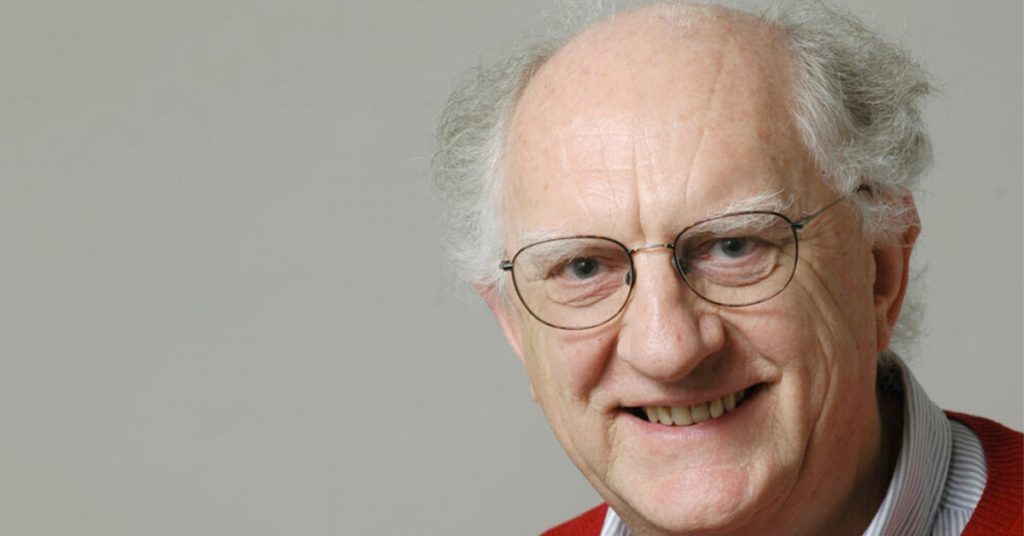
John Clarke physics Nobel Prize has been awarded to the University of California, Berkeley emeritus professor John Clarke for his revolutionary work on quantum tunneling — one of the most intriguing phenomena in quantum mechanics. Clarke shares the 2025 Nobel Prize in Physics with Michel H. Devoret and John M. Martinis, who were also affiliated with UC Berkeley during their prize-winning research.
The John Clarke physics Nobel Prize recognizes the trio’s discovery of macroscopic quantum mechanical tunneling and energy quantization in an electric circuit. Their research laid the scientific foundation for superconducting quantum bits, or qubits — the fundamental components of modern quantum computers.
Clarke becomes the 27th UC Berkeley faculty member to receive a Nobel Prize, marking the university’s fourth Nobel recognition in just five years. Chancellor Rich Lyons celebrated the win, noting that Clarke’s pioneering work strengthens Berkeley’s leadership in global quantum computing initiatives.
UC President James B. Milliken praised the John Clarke physics Nobel Prize achievement, emphasizing that the laureates’ discoveries have paved the way for a new era of quantum technology — from advanced computing and cryptography to revolutionary medical research and cybersecurity innovations.
Quantum tunneling — the process that allows particles like electrons to pass through barriers deemed impossible by classical physics — has long fascinated scientists. Clarke and his collaborators brought this concept into the macroscopic world in the early 1980s through superconducting circuits. Their experiment demonstrated that a simple electrical circuit could display quantum behavior, a milestone now recognized by the Nobel Committee.
According to Irfan Siddiqi, chair of UC Berkeley’s Department of Physics, this achievement was monumental: “The fact that you can see the quantum world in an electrical circuit in this very direct way was really the source of the prize.” The Nobel Committee described their work as “the foundation for exploring macroscopic quantum physics in superconducting circuits.”
In his reaction to the John Clarke physics Nobel Prize, Clarke admitted being taken by surprise. “To put it mildly, it was the surprise of my life,” he said, adding that the discovery was a collective effort made possible by Devoret and Martinis.
Clarke, who joined UC Berkeley’s faculty in 1969, led groundbreaking experiments in the 1980s that confirmed macroscopic quantum tunneling (MQT) in superconducting circuits. Using a Josephson junction — a quantum version of a classical pendulum — his team proved that macroscopic circuits could behave like single atoms, possessing discrete energy levels and the ability to tunnel between quantum states.
This discovery, as Siddiqi explained, represents “the grandfather of qubits.” The basic concept demonstrated by Clarke’s team remains at the heart of all quantum computing systems today.
Beyond the John Clarke physics Nobel Prize, the professor is also renowned for his work on SQUIDs — superconducting quantum interference devices — which have been used in applications ranging from geophysics to medical imaging. His latest collaboration, the Axion Dark Matter Experiment (ADMX), uses advanced SQUID-based amplifiers to search for dark matter candidates.
Born in 1942 in Cambridge, United Kingdom, Clarke earned his BA and PhD in Physics from Cambridge University before joining UC Berkeley. Over his illustrious career, he has been recognized with numerous awards, including the California Scientist of the Year and the National Academy of Sciences Comstock Prize.
The John Clarke physics Nobel Prize not only honors decades of groundbreaking research but also highlights how fundamental science can spark revolutionary technologies shaping the future of quantum computing and beyond.
Read latest news on supernews.pk