


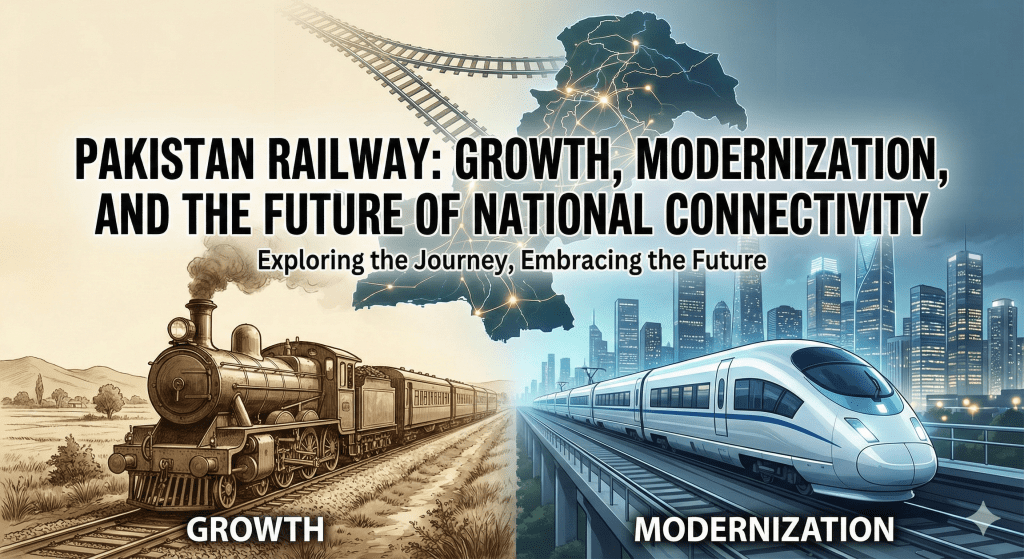
Pakistan Railway has always been more than a transport system. It is a national lifeline—connecting cities, empowering trade, and supporting millions of passengers every year. As Pakistan focuses on infrastructure development and economic revitalization, Pakistan Railway stands at the center of modernization plans, aiming to evolve from a struggling department into a competitive, technologically advanced transportation network.
In recent years, the renewed focus on digitalization, track rehabilitation, freight enhancement, and international partnerships—especially under the China-Pakistan Economic Corridor (CPEC)—has given Pakistan Railway an opportunity to regain its lost glory. This comprehensive blog explores the current state, challenges, reforms, and future potential of Pakistan Railway, while highlighting why its revival is essential for Pakistan’s socio-economic progress.
Historical Significance of Pakistan Railway
Established during the British colonial era, Pakistan Railway became a fundamental pillar of mobility after independence. The rail network, once one of the most reliable in South Asia, connected remote regions with major urban centers including Karachi, Lahore, Rawalpindi, Peshawar, Quetta, and Multan.
For decades, Pakistan Railway played a key role in:
-
Passenger travel
-
Freight movement (coal, wheat, petroleum, and industrial goods)
-
Military logistics
-
Inter-provincial connectivity
-
Economic integration
However, despite its strategic importance, decades of underinvestment, poor maintenance, and political interference led to a gradual decline. This made modernization an urgent national priority.
Current Structure and Operations of Pakistan Railway
Today, Pakistan Railway operates across 7,800+ km of tracks, covering all major provinces. The network includes:
-
Passenger Trains: Air-conditioned, business class, and economy class coaches
-
Freight Services: Transporting fuel, containers, minerals, agricultural commodities, and industrial supplies
-
Special Trains: Eid operations, tourism trains, and seasonal routes
The department has also embraced partial automation, with online ticketing, SMS alerts, and mobile booking apps. Despite existing challenges, Pakistan Railway remains one of the most affordable means of inter-city travel in Pakistan.
Challenges Facing Pakistan Railway
To understand the need for reform, it is essential to acknowledge the long-standing challenges Pakistan Railway continues to face.
1. Outdated Infrastructure
Many tracks, stations, and locomotives are decades old. Aging infrastructure increases derailments, delays, and repair costs.
2. Financial Losses
Pakistan Railway has historically operated at a deficit due to mismanagement, outdated equipment, and subsidized fares.
3. Slow Freight Operations
Despite having high profit potential, freight services remain underutilized. Private transporters often dominate due to faster turnaround times.
4. Safety Concerns
Accidents caused by mechanical failure, track issues, and operational inefficiencies have reduced public confidence.
5. Limited Digital Transformation
Although online booking exists, broader digitalization—including cargo tracking, predictive maintenance, and automation—is still developing.
Government Reforms and Modernization Plans
Modernizing Pakistan Railway is now a major national goal, especially under global partnerships and infrastructure development projects.
1. ML-1 (Main Line-1) Upgrade under CPEC
The ML-1 project is the centerpiece of Pakistan Railway’s modernization strategy. It aims to upgrade the Karachi–Peshawar railway line with modern signaling and high-speed tracks. Once completed, ML-1 will:
-
Increase train speeds to 160 km/h
-
Reduce travel time significantly
-
Improve passenger comfort and safety
-
Boost freight capacity by millions of tons
-
Create thousands of jobs
ML-1 is expected to be a game-changer for the entire railway network.
2. Locomotive and Rolling Stock Modernization
Pakistan Railway has invested in new locomotives, upgraded coaches, and modern brake systems to improve performance and reduce breakdowns.
3. Digital Ticketing & E-Governance
Efforts to digitalize include:
-
Online ticket purchasing
-
QR-based tickets
-
Passenger data management systems
-
Freight tracking pilots
This shift enhances transparency and reduces booking-related corruption.
4. Station Renovations and Passenger Facilities
Key stations such as Lahore, Karachi Cantt, Islamabad, Rohri, and Multan have been upgraded with:
-
Security scanning systems
-
Clean waiting areas
-
Digital information boards
-
Better accessibility for disabled passengers
5. Public-Private Partnerships (PPP)
Pakistan Railway is increasingly leasing freight trains and certain services to private companies to boost revenue and improve efficiency.
The Growing Role of Freight in Pakistan Railway’s Future
Freight is the most profitable segment of any railway system. Pakistan Railway currently carries only a fraction of national cargo, but major reforms aim to expand its role.
Freight modernization initiatives include:
-
Containerized freight services
-
Dedicated freight trains for oil, coal, and industrial raw materials
-
Automation of freight management
-
Expansion of dry ports in Lahore, Faisalabad, and Quetta
Boosting freight operations will significantly improve Pakistan Railway’s financial health and support industrial growth nationwide.
Pakistan Railway and Economic Development
The revival of Pakistan Railway is essential for Pakistan’s broader economic objectives.
1. Cost-Effective Transportation
Rail transport is significantly cheaper than road transport for both passengers and goods, helping reduce business costs.
2. Reduced Road Congestion
A strong railway network decreases pressure on highways, minimizing traffic accidents and road maintenance expenses.
3. Boost to Tourism
Tourism trains, scenic routes, and heritage railway stations offer substantial potential for domestic tourism.
4. Employment Opportunities
Pakistan Railway supports thousands of direct and indirect jobs in operations, manufacturing, engineering, and maintenance.
5. Regional Connectivity
Pakistan Railway plays an important role in linking Pakistan with Central Asia, China, Afghanistan, Iran, and Turkey—strengthening trade corridors.
Smart Technologies and the Digital Future of Pakistan Railway
The global railway industry is moving toward AI-driven automation, IoT-based monitoring, and predictive maintenance. Pakistan Railway is gradually adopting these technologies.
Key digital advancements include:
-
IoT-powered sensors for track and locomotive monitoring
-
Data-driven scheduling to reduce delays
-
Smart ticketing systems
-
Digital freight management
-
AI-assisted route optimization
As investment increases, Pakistan Railway can integrate more advanced technologies to enhance reliability and efficiency.
Environmental Benefits of Strengthening Pakistan Railway
Rail transport is one of the most environmentally friendly modes of travel. Improving Pakistan Railway supports Pakistan’s environmental commitments.
Environmental advantages include:
-
Reduced carbon emissions
-
Fuel-efficient mass transportation
-
Lower road congestion
-
Protection of natural landscapes through fewer highways
A modern railway system aligns with Pakistan’s climate goals and contributes to sustainable development.
Future Vision: What Pakistan Railway Could Become
The future of Pakistan Railway depends on sustained investment, professional management, and long-term planning. If modernization continues, Pakistan Railway can:
-
Offer high-speed, comfortable passenger travel
-
Become the backbone of Pakistan’s freight logistics
-
Provide digital-first services with full transparency
-
Strengthen cross-border trade
-
Support industrial zones and economic corridors
With CPEC integration and infrastructure upgrades, Pakistan Railway has the potential to become a regional transport leader.
Conclusion
Pakistan Railway remains essential to Pakistan’s economic, social, and regional development. Despite the challenges, recent reforms, modernization initiatives, and international collaborations have created momentum for meaningful change. With the ML-1 project, digital ticketing, upgraded locomotives, and improved freight systems, Pakistan Railway is entering a new era of modernization.
A strong railway system not only reduces transportation costs and enhances mobility but also drives national growth. Continued investment, policy stability, and technological innovation will determine how efficiently Pakistan Railway can transform into a modern, competitive, and reliable transport network for millions of people.