


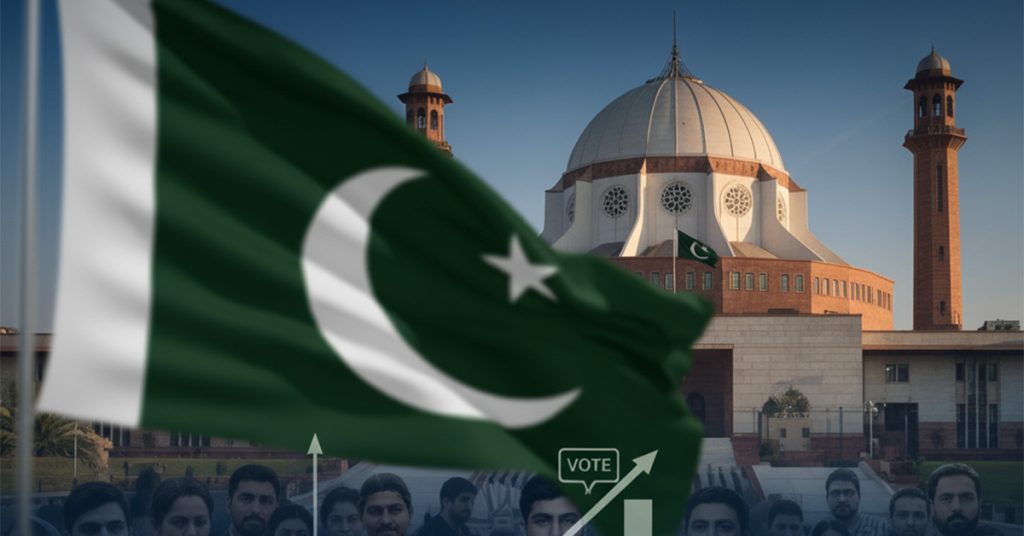
As November 2025 unfolds, Pakistan’s political climate continues to experience turbulence, negotiations, and evolving power dynamics. From government reforms to opposition rallies and concerns over democratic stability, the country’s political discourse remains as vibrant and volatile as ever. This month reflects both the challenges of governance and the enduring resilience of Pakistan’s democracy.
In this comprehensive overview, we explore the latest Pakistan politics in November 2025 developments, government responses, opposition strategies, and the broader implications for democracy and governance.
- Overview of Pakistan’s Political Landscape
The year 2025 has proven pivotal for Pakistan’s politics, with the government under immense pressure to stabilise the economy, address public concerns, and maintain political cohesion. The Pakistan government updates throughout the past few months have focused on administrative reforms, fiscal adjustments, and foreign policy realignments — yet public dissatisfaction continues to grow.
The political crisis in Pakistan has been shaped by ongoing disputes between the ruling coalition and the opposition alliance. Allegations of corruption, policy inefficiency, and governance failure have amplified tensions within the parliament and on the streets.
At the heart of these issues lies a fundamental question: Can Pakistan’s democracy deliver on its promises amid such polarisation?
- Government’s Current Challenges and Policy Priorities
In November 2025, the government faces multiple fronts of difficulty — from rising inflation and unemployment to the struggle for institutional credibility. The ruling coalition has launched a new economic stabilisation program aimed at curbing inflation and improving investor confidence. However, critics argue that the reforms lack transparency and fail to address the plight of the common citizen.
Recent Pakistan government updates indicate that key ministries are undergoing reshuffles to improve efficiency. The finance ministry, in particular, has been under scrutiny for its handling of foreign reserves and loan repayments. Meanwhile, diplomatic engagements with Gulf and Asian countries aim to attract foreign investment and strengthen trade relations.
The Prime Minister’s Office continues to emphasise “economic revival through accountability and governance,” though the opposition remains unconvinced. Amid these competing narratives, the government is racing against time to prove its competence before the next electoral cycle begins.
- Opposition’s Growing Influence and Nationwide Protests
While the government struggles to maintain its grip on power, the opposition parties have become increasingly vocal. Several major political parties have joined forces to demand fresh elections, citing mismanagement and corruption as the basis for their agitation.
In November 2025, the political crisis in Pakistan deepened after a series of nationwide protests organised by the opposition. Large gatherings in Karachi, Lahore, and Islamabad showcased public frustration over inflation, power shortages, and lack of employment opportunities.
Opposition leaders accuse the ruling coalition of undermining democratic institutions and silencing dissent. They are pushing for greater parliamentary transparency and the reinstatement of an independent election commission to ensure fair future elections.
Observers note that the resurgence of opposition unity could potentially reshape Pakistan’s political trajectory. However, whether these movements will translate into meaningful electoral gains remains to be seen.
- The Role of Judiciary and State Institutions
A significant dimension of Pakistan’s politics in November 2025 lies in the ongoing judicial proceedings against several political figures. The Supreme Court and National Accountability Bureau (NAB) remain at the centre of attention, as high-profile corruption cases continue to dominate headlines.
Legal experts emphasise that the judiciary’s decisions in the coming months will heavily influence public confidence in the rule of law and democratic integrity. There have been repeated calls for judicial neutrality amid accusations of selective accountability.
The Pakistan government has pledged to respect judicial verdicts but insists that “accountability must not be politicised.” Meanwhile, the opposition alleges that legal proceedings are being used to target political rivals rather than promote justice.
This tug-of-war between state institutions underscores the delicate balance of power within Pakistan’s democracy.
- Media, Civil Society, and the Fight for Democratic Space
In Pakistan’s democratic framework, the media and civil society continue to play a critical role in shaping political awareness. Independent journalists have faced increasing restrictions, while several digital platforms report growing censorship.
Activists argue that democracy in Pakistan is incomplete without a free press and empowered civic participation. Despite pressures, journalists and civil rights organisations remain steadfast in demanding transparency, accountability, and reforms.
Social media has become the battleground for political messaging — both for governments defending their policies and for opposition groups mobilising youth-driven campaigns. The spread of misinformation, however, remains a challenge, threatening to distort public perception and deepen divisions.
- Economic Factors Driving Political Discontent
Economics remains at the core of Pakistan’s political instability. Inflation has crossed the double-digit mark, foreign exchange reserves are under strain, and energy shortages persist in major cities. The public’s growing frustration with rising costs of living has intensified anti-government sentiments.
To mitigate the crisis, the government has announced subsidies on essential commodities and introduced reforms in the power sector. Yet, analysts argue that without structural reforms and export-driven policies, these measures may only provide temporary relief.
The political crisis Pakistan faces is therefore intertwined with economic pressures — a reminder that sustainable governance requires both political will and financial discipline.
- Foreign Relations and Political Implications
Internationally, Pakistan’s politics in November 2025 is closely linked with evolving foreign alliances. Relations with China continue to strengthen under the China-Pakistan Economic Corridor (CPEC) framework, with new infrastructure projects underway. Meanwhile, engagement with Western partners remains cautious due to differing positions on human rights and security issues.
Regional diplomacy has also intensified, particularly with Afghanistan and Iran. The Pakistan government updates reveal that border management and trade agreements are being revisited to enhance regional stability.
Foreign policy analysts believe that maintaining balanced relations between East and West will be crucial for Pakistan’s long-term political and economic sustainability.
- Democracy Under Pressure: Can the System Endure?
Pakistan’s democratic journey has always been a story of resilience amid adversity. However, as November 2025 unfolds, fears of democratic backsliding are again surfacing. Civil-military relations, press freedom, and electoral integrity remain points of contention.
The Pakistani democracy framework has endured military interventions, political instability, and constitutional crises in the past. Yet, the current situation presents a unique test — whether democratic institutions can reform themselves without collapsing under populist or authoritarian pressures.
Political scientists argue that the survival of Pakistan’s democracy will depend on three key factors:
- The willingness of political parties to engage in constructive dialogue.
- Institutional reforms ensuring fair accountability.
- The empowerment of citizens through education and participation.
If these foundations are strengthened, Pakistan’s democracy could emerge more resilient and responsive to people’s needs.
- Youth and the Changing Political Narrative
With over 60% of Pakistan’s population under the age of 30, youth participation in politics has become increasingly significant. Social media activism, student movements, and youth-led organisations are influencing public debate like never before.
In Pakistan politics in November 2025, young citizens are demanding a new political culture — one that prioritises innovation, employment, and transparency over traditional party politics. Many are disillusioned with corruption and seek alternatives through independent candidates or new political platforms.
The government has recognized this shift and launched youth engagement programs focusing on entrepreneurship and skill development. Yet, the question remains whether these initiatives will translate into genuine empowerment or remain symbolic gestures.
- Looking Ahead: The Road to Stability
As Pakistan enters the final months of 2025, political observers predict that the next year could be decisive for the country’s democratic evolution. The government’s ability to implement reforms, manage dissent, and uphold institutional integrity will determine the direction of Pakistan’s politics in 2026 and beyond.
The political crisis Pakistan faces today may ultimately push its leaders to embrace reform, dialogue, and unity. Whether that happens peacefully or through confrontation will depend on how both government and opposition prioritise national interest over partisan gains.
Despite ongoing uncertainty, one thing is clear — Pakistan’s democracy continues to endure, reflecting the people’s commitment to their constitutional rights and collective future.
Conclusion
Pakistan’s politics in November 2025 offers a complex yet hopeful picture of a nation struggling to balance governance, opposition, and democratic ideals. While challenges persist — from economic instability to political polarisation — the country’s democratic fabric remains intact.
The coming months will be crucial for defining how Pakistan navigates this transition. Will the ruling government deliver on its promises? Can the opposition maintain unity? And most importantly, will democracy emerge stronger?
As history has shown, Pakistan’s political journey may be turbulent, but its people’s resilience ensures that the dream of democracy remains alive.
Get updates at your fingertips by visiting supernews.pk