


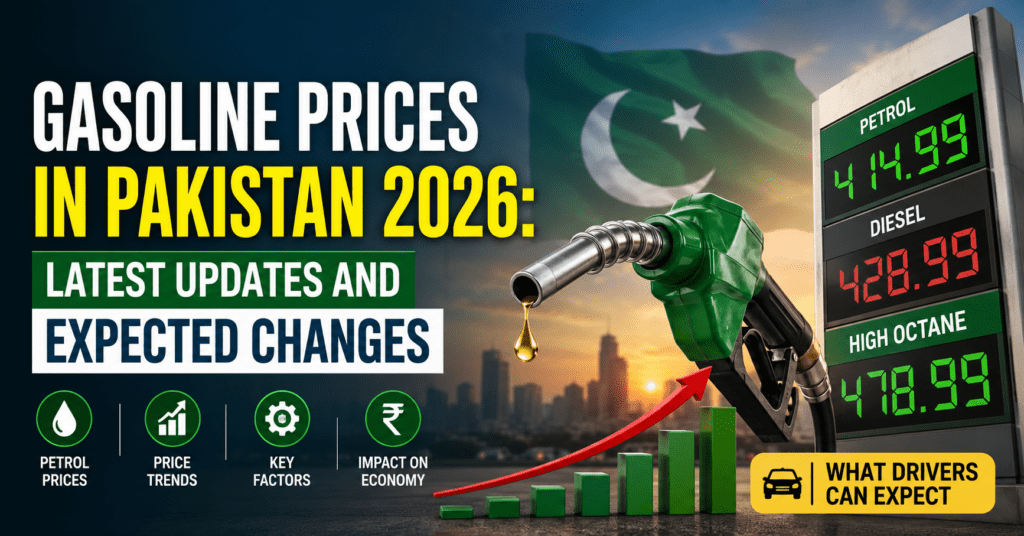
The topic of gasoline & fuel remains one of the biggest concerns for Pakistani consumers in 2026. Whether you own a motorcycle, a family car, manage a transport business, or simply travel daily, fuel prices directly affect household budgets and overall expenses.
In Pakistan, fuel prices influence much more than transportation costs. They affect food prices, logistics, manufacturing, public transport fares, and inflation across the country. Over the past few years, Pakistan has experienced significant fluctuations in petrol and diesel rates due to international oil market changes, exchange rate movements, and domestic economic policies.
Recent fuel notifications and market tracking show that petrol prices in Pakistan crossed the Rs. 400 range during parts of 2026 before periodic adjustments occurred. Pakistan’s fuel pricing continues to react strongly to global crude oil conditions and government policy decisions.
In this article, we will discuss the latest gasoline & fuel updates in Pakistan, factors affecting prices, expected changes, and predictions for the coming months.
Current Gasoline & Fuel Price Situation in Pakistan
Pakistan reviews petroleum prices periodically, generally after recommendations and market assessments. Petrol, high-speed diesel (HSD), kerosene oil, and other petroleum products are adjusted according to multiple economic indicators.
Recent reports during 2026 showed substantial fluctuations in pricing:
- Petrol rates moved around the Rs. 390–415 per liter range during different periods
- High-Speed Diesel also experienced similar changes
- Fuel adjustments reflected international oil market volatility
- Consumers faced rising transportation and living costs due to fuel price changes
These fluctuations have increased concern among both consumers and businesses.
Why Gasoline & Fuel Prices Change in Pakistan
Several major factors influence fuel prices in Pakistan.
1. Global Crude Oil Prices
Pakistan imports a large portion of its petroleum requirements. Therefore, any increase in international crude oil prices immediately affects local markets.
If crude oil prices increase globally:
- Petrol prices rise
- Diesel prices rise
- Transportation costs increase
- Imported goods become more expensive
International market disruptions and geopolitical tensions can rapidly impact fuel costs. Market analysts observed significant upward pressure in 2026 due to global oil market uncertainty.
2. Dollar Exchange Rate
Since petroleum imports are paid in US dollars, currency fluctuations directly affect domestic fuel costs.
When the Pakistani Rupee weakens:
- Import costs rise
- Petroleum becomes expensive
- Fuel prices increase
Even if crude oil prices remain stable, a weaker rupee can still create fuel price pressure.
3. Government Taxes and Levies
Fuel pricing in Pakistan includes:
- Petroleum Development Levy (PDL)
- Sales taxes
- Distribution margins
- Dealer commissions
Changes in taxes significantly impact consumer fuel rates.
4. Import Costs and Freight Charges
Additional expenses include:
- Shipping costs
- Insurance
- Refinery processing charges
- Supply chain costs
These factors contribute to the final fuel price consumers pay.
Recent Fuel Price Trends in Pakistan During 2026
The first half of 2026 saw notable volatility in Pakistan’s petroleum market.
Key developments included:
- Fuel prices crossing psychological price levels
- Multiple revisions during short periods
- Increased pressure on transport sectors
- Higher operational costs for businesses
Recent updates indicated petrol prices reaching over Rs. 414 per litre before later adjustments.
Pakistan’s gasoline price indicators also showed record highs in international dollar-based measurements during parts of 2026.
Impact of Rising Gasoline & Fuel Prices on Pakistani Consumers
Transportation Costs
Fuel prices directly influence:
- Bus fares
- Ride-hailing services
- Cargo transport
- Intercity travel
When fuel prices increase, transportation providers often raise fares.
Household Expenses
Higher fuel prices also affect:
- Grocery prices
- Electricity-related costs
- Daily commuting expenses
- Utility services
Families with fixed incomes usually experience stronger financial pressure.
Business Operations
Businesses that depend heavily on logistics face increased expenses.
Examples include:
- Food delivery companies
- Manufacturing industries
- Courier services
- Retail businesses
As operational costs rise, many companies increase product prices.
Which Vehicles Are Most Affected?
Different vehicle categories experience fuel price increases differently.
Motorcycles
Motorcycles remain common across Pakistan because of lower operating costs. However, even small petrol increases affect monthly budgets for daily commuters.
Cars and SUVs
Larger vehicles consume more fuel and therefore face greater expense increases.
Vehicles with:
- Lower fuel efficiency
- Larger engines
- Long-distance usage
experience greater cost impact.
Commercial Vehicles
Trucks, buses, and transport fleets experience the strongest effects because diesel prices heavily influence logistics costs.
Expected Gasoline & Fuel Changes in Pakistan During the Rest of 2026
Predicting fuel prices with complete certainty is difficult because many external variables influence markets.
However, analysts expect several possibilities:
Scenario 1: International Oil Prices Increase
If crude oil prices continue rising:
- Petrol may rise further
- Diesel costs could increase
- Inflation pressure may intensify
Scenario 2: Stable Global Markets
If oil supply remains stable:
- Fuel prices may remain within a manageable range
- Short-term fluctuations may continue
- Consumers could experience temporary relief
Scenario 3: Economic Improvements
If Pakistan experiences:
- Stronger currency performance
- Reduced import pressure
- Better economic conditions
fuel prices could stabilize.
Tips to Reduce Fuel Expenses in Pakistan
Since gasoline & fuel costs remain unpredictable, consumers can adopt fuel-saving practices.
Maintain Proper Tire Pressure
Incorrect tire pressure increases fuel consumption.
Avoid Sudden Acceleration
Smooth driving reduces unnecessary fuel use.
Reduce Vehicle Weight
Extra load increases engine effort and fuel usage.
Perform Regular Vehicle Maintenance
Clean filters and properly maintained engines improve fuel efficiency.
Plan Routes Carefully
Avoiding traffic congestion can save fuel.
Will Electric Vehicles Reduce Pakistan’s Fuel Dependence?
Electric vehicles (EVs) are slowly gaining attention in Pakistan.
Potential benefits include:
- Lower running costs
- Reduced dependence on imported fuel
- Environmental benefits
- Lower long-term expenses
However, challenges still exist:
- Limited charging infrastructure
- High vehicle costs
- Consumer awareness issues
As infrastructure develops, EV adoption may gradually reduce dependence on traditional gasoline.
Future of Gasoline & Fuel in Pakistan
Pakistan’s future fuel market will likely depend on:
- International oil prices
- Energy diversification
- Economic growth
- Government policies
- Alternative energy development
Many experts believe the country may increasingly focus on hybrid and electric technologies to reduce fuel dependency.
Final Thoughts
The gasoline & fuel market in Pakistan continues to experience rapid changes in 2026. Rising international oil prices, currency fluctuations, taxation policies, and economic conditions all influence what consumers pay at fuel stations.
While recent market activity has shown periods where fuel prices exceeded Rs. 400 per litre before adjustments, uncertainty remains a major challenge for households and businesses.
Consumers should stay updated with official fuel notifications and consider fuel-saving strategies to minimize the impact of future price increases.
For anyone living in Pakistan, understanding gasoline and fuel trends is becoming increasingly important for budgeting and long-term financial planning.